
Ensuring Accountability: Steps to Take if You Experience Surgeon Negligence
Ensuring Accountability: Steps to Take if You Experience Surgeon Negligence
Introduction
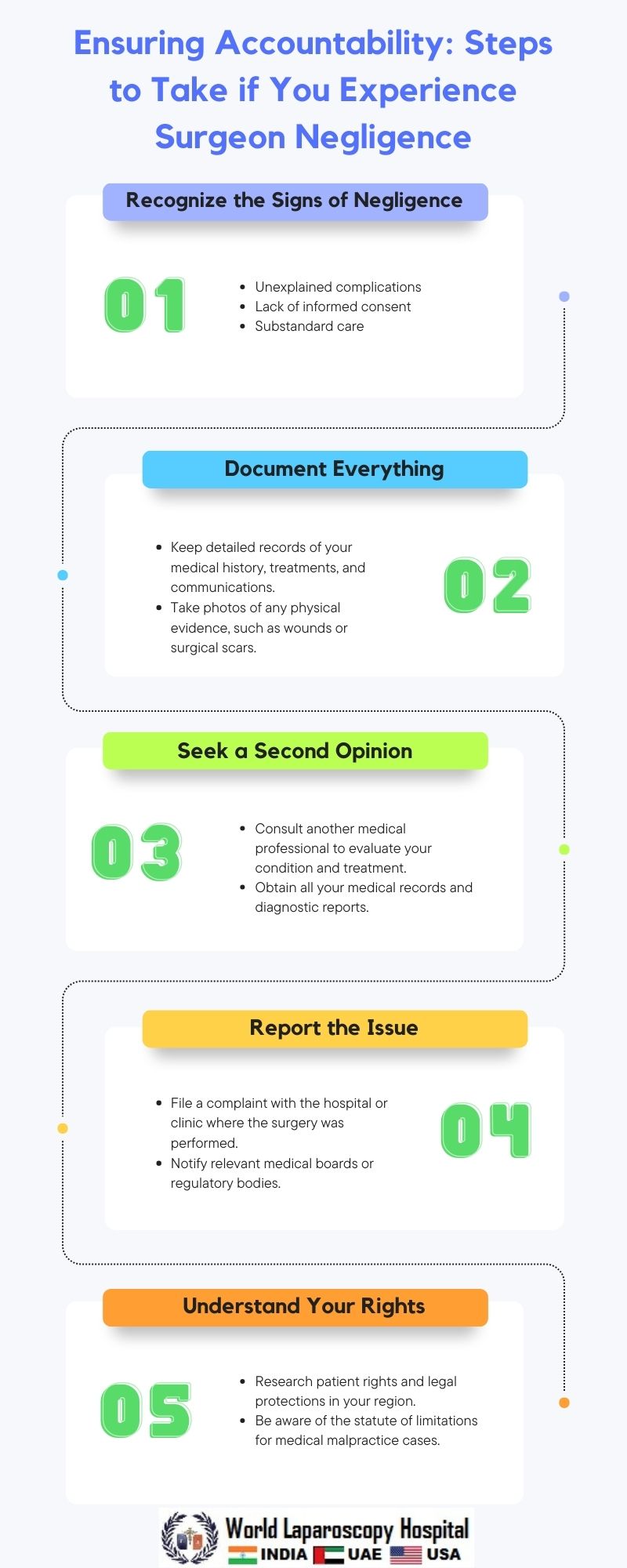
Surgeon negligence is a grave concern in the medical field, with potentially devastating consequences for patients. While most surgeries are performed with the utmost care and professionalism, instances of negligence can and do occur. Understanding what to do if you experience surgeon negligence is crucial for ensuring accountability, seeking justice, and preventing future occurrences. This article outlines the steps to take, from recognizing the signs of negligence to navigating the legal process, and emphasizes the importance of patient advocacy in the healthcare system.
Understanding Surgeon Negligence
Surgeon negligence refers to a breach of duty by a surgical professional that leads to patient harm. This can occur in various forms, such as:
Surgical Errors: Mistakes made during the procedure, including wrong-site surgery, leaving instruments inside the patient, or accidental damage to organs.
Anesthesia Errors: Incorrect administration of anesthesia leading to complications or inadequate monitoring during surgery.
Postoperative Care Failures: Inadequate monitoring, failure to recognize and treat complications, or improper discharge instructions.
Lack of Informed Consent: Not providing adequate information about the risks, benefits, and alternatives of the surgery, depriving the patient of the opportunity to make an informed decision.
Recognizing these signs is the first step towards addressing surgeon negligence.
Immediate Steps to Take
Seek Medical Attention:
If you suspect negligence has occurred, your immediate priority should be your health. Seek medical attention from another healthcare provider to address any complications or injuries resulting from the negligent surgery.
Document Everything:
Maintain a detailed record of your medical history, including the surgery, postoperative instructions, follow-up appointments, and any complications or symptoms experienced. Keep copies of medical records, prescriptions, and communications with healthcare providers.
Photographic Evidence:
If your injury is visible, take clear photographs to document its progression. This can serve as crucial evidence in proving the impact of the negligence.
Reporting the Incident
Communicate with the Surgeon and Hospital:
Contact the surgeon and the hospital where the procedure was performed. Express your concerns and request a detailed explanation of what happened. This step can sometimes lead to an immediate resolution or at least provide you with more information.
File a Complaint with the Hospital:
Hospitals often have internal procedures for handling complaints. File a formal complaint outlining your concerns and providing all relevant documentation. The hospital may conduct an internal investigation, which can be an important part of establishing negligence.
Notify Medical Licensing Boards:
Report the incident to the medical licensing board in your state or country. These boards oversee the professional conduct of healthcare providers and can initiate disciplinary action if necessary.
Seeking Legal Recourse
Consult a Medical Malpractice Attorney:
Engage a lawyer specializing in medical malpractice as soon as possible. They can provide a professional assessment of your case, help gather additional evidence, and guide you through the legal process. Many malpractice attorneys work on a contingency fee basis, meaning they only get paid if you win your case.
Statute of Limitations:
Be aware of the statute of limitations for filing a medical malpractice lawsuit in your jurisdiction. This is a legal deadline for taking action, and it varies by state and country. Missing this deadline can result in losing your right to sue.
Gather Expert Testimony:
Your attorney will likely seek expert testimony from other medical professionals to establish that the standard of care was breached. These experts can provide crucial support for your case by demonstrating how the surgeon’s actions deviated from accepted medical practices.
The Legal Process
Filing the Lawsuit:
Your attorney will file a formal complaint in court, outlining the details of your case and the damages you are seeking. This initiates the legal process and notifies the surgeon and hospital of your intent to sue.
Discovery Phase:
During discovery, both parties exchange information and evidence. This includes medical records, depositions (sworn statements), and interrogatories (written questions). Discovery is a critical phase for building your case and uncovering the facts.
Settlement Negotiations:
Many medical malpractice cases are settled out of court. Your attorney will negotiate with the defendant’s legal team to reach a fair settlement. If an agreement is reached, the case can be resolved without going to trial.
Trial:
If a settlement cannot be reached, the case will proceed to trial. Both sides will present their evidence and arguments, and a judge or jury will determine the outcome. Trials can be lengthy and complex, but they offer the opportunity for a public resolution of your claims.
Understanding Compensation
Economic Damages:
These are quantifiable financial losses resulting from the negligence, such as medical expenses, lost wages, and future medical costs.
Non-Economic Damages:
These compensate for intangible losses like pain and suffering, emotional distress, and loss of enjoyment of life.
Punitive Damages:
In cases of gross negligence or intentional harm, punitive damages may be awarded to punish the defendant and deter similar behavior in the future.
The Role of Patient Advocacy
Patient Advocacy Groups:
Organizations dedicated to patient rights can provide support, resources, and guidance throughout your journey. They can connect you with legal experts, offer advice, and help you understand your rights.
Raising Awareness:
Sharing your experience can help raise awareness about surgical negligence and push for changes in healthcare policies and practices. Consider speaking out through media, social platforms, or advocacy groups.
Policy Changes:
Advocate for changes in healthcare policies to improve patient safety and accountability. This can include supporting legislation for stricter oversight of medical professionals and better reporting systems for medical errors.
Preventing Future Occurrences
Improved Training and Education:
Push for enhanced training programs for surgeons and medical staff to reduce the likelihood of errors. Continuing education and regular assessments can help maintain high standards of care.
Systemic Changes:
Advocate for systemic changes in healthcare institutions, such as improved protocols for surgical procedures, better communication among medical teams, and robust error reporting systems.
Patient Empowerment:
Encourage patients to be proactive in their healthcare. Educate them about their rights, the importance of informed consent, and how to advocate for themselves in medical settings.
Conclusion
Experiencing surgeon negligence can be a traumatic and life-altering event. However, by taking the right steps, you can ensure accountability, seek justice, and contribute to improving the healthcare system. From recognizing the signs of negligence to navigating the legal process and advocating for change, each step is vital in addressing and preventing surgical errors. Remember, you are not alone—resources, legal experts, and advocacy groups are available to support you every step of the way.
Introduction
Surgeon negligence is a grave concern in the medical field, with potentially devastating consequences for patients. While most surgeries are performed with the utmost care and professionalism, instances of negligence can and do occur. Understanding what to do if you experience surgeon negligence is crucial for ensuring accountability, seeking justice, and preventing future occurrences. This article outlines the steps to take, from recognizing the signs of negligence to navigating the legal process, and emphasizes the importance of patient advocacy in the healthcare system.
Understanding Surgeon Negligence
Surgeon negligence refers to a breach of duty by a surgical professional that leads to patient harm. This can occur in various forms, such as:
Surgical Errors: Mistakes made during the procedure, including wrong-site surgery, leaving instruments inside the patient, or accidental damage to organs.
Anesthesia Errors: Incorrect administration of anesthesia leading to complications or inadequate monitoring during surgery.
Postoperative Care Failures: Inadequate monitoring, failure to recognize and treat complications, or improper discharge instructions.
Lack of Informed Consent: Not providing adequate information about the risks, benefits, and alternatives of the surgery, depriving the patient of the opportunity to make an informed decision.
Recognizing these signs is the first step towards addressing surgeon negligence.
Immediate Steps to Take
Seek Medical Attention:
If you suspect negligence has occurred, your immediate priority should be your health. Seek medical attention from another healthcare provider to address any complications or injuries resulting from the negligent surgery.
Document Everything:
Maintain a detailed record of your medical history, including the surgery, postoperative instructions, follow-up appointments, and any complications or symptoms experienced. Keep copies of medical records, prescriptions, and communications with healthcare providers.
Photographic Evidence:
If your injury is visible, take clear photographs to document its progression. This can serve as crucial evidence in proving the impact of the negligence.
Reporting the Incident
Communicate with the Surgeon and Hospital:
Contact the surgeon and the hospital where the procedure was performed. Express your concerns and request a detailed explanation of what happened. This step can sometimes lead to an immediate resolution or at least provide you with more information.
File a Complaint with the Hospital:
Hospitals often have internal procedures for handling complaints. File a formal complaint outlining your concerns and providing all relevant documentation. The hospital may conduct an internal investigation, which can be an important part of establishing negligence.
Notify Medical Licensing Boards:
Report the incident to the medical licensing board in your state or country. These boards oversee the professional conduct of healthcare providers and can initiate disciplinary action if necessary.
Seeking Legal Recourse
Consult a Medical Malpractice Attorney:
Engage a lawyer specializing in medical malpractice as soon as possible. They can provide a professional assessment of your case, help gather additional evidence, and guide you through the legal process. Many malpractice attorneys work on a contingency fee basis, meaning they only get paid if you win your case.
Statute of Limitations:
Be aware of the statute of limitations for filing a medical malpractice lawsuit in your jurisdiction. This is a legal deadline for taking action, and it varies by state and country. Missing this deadline can result in losing your right to sue.
Gather Expert Testimony:
Your attorney will likely seek expert testimony from other medical professionals to establish that the standard of care was breached. These experts can provide crucial support for your case by demonstrating how the surgeon’s actions deviated from accepted medical practices.
The Legal Process
Filing the Lawsuit:
Your attorney will file a formal complaint in court, outlining the details of your case and the damages you are seeking. This initiates the legal process and notifies the surgeon and hospital of your intent to sue.
Discovery Phase:
During discovery, both parties exchange information and evidence. This includes medical records, depositions (sworn statements), and interrogatories (written questions). Discovery is a critical phase for building your case and uncovering the facts.
Settlement Negotiations:
Many medical malpractice cases are settled out of court. Your attorney will negotiate with the defendant’s legal team to reach a fair settlement. If an agreement is reached, the case can be resolved without going to trial.
Trial:
If a settlement cannot be reached, the case will proceed to trial. Both sides will present their evidence and arguments, and a judge or jury will determine the outcome. Trials can be lengthy and complex, but they offer the opportunity for a public resolution of your claims.
Understanding Compensation
Economic Damages:
These are quantifiable financial losses resulting from the negligence, such as medical expenses, lost wages, and future medical costs.
Non-Economic Damages:
These compensate for intangible losses like pain and suffering, emotional distress, and loss of enjoyment of life.
Punitive Damages:
In cases of gross negligence or intentional harm, punitive damages may be awarded to punish the defendant and deter similar behavior in the future.
The Role of Patient Advocacy
Patient Advocacy Groups:
Organizations dedicated to patient rights can provide support, resources, and guidance throughout your journey. They can connect you with legal experts, offer advice, and help you understand your rights.
Raising Awareness:
Sharing your experience can help raise awareness about surgical negligence and push for changes in healthcare policies and practices. Consider speaking out through media, social platforms, or advocacy groups.
Policy Changes:
Advocate for changes in healthcare policies to improve patient safety and accountability. This can include supporting legislation for stricter oversight of medical professionals and better reporting systems for medical errors.
Preventing Future Occurrences
Improved Training and Education:
Push for enhanced training programs for surgeons and medical staff to reduce the likelihood of errors. Continuing education and regular assessments can help maintain high standards of care.
Systemic Changes:
Advocate for systemic changes in healthcare institutions, such as improved protocols for surgical procedures, better communication among medical teams, and robust error reporting systems.
Patient Empowerment:
Encourage patients to be proactive in their healthcare. Educate them about their rights, the importance of informed consent, and how to advocate for themselves in medical settings.
Conclusion
Experiencing surgeon negligence can be a traumatic and life-altering event. However, by taking the right steps, you can ensure accountability, seek justice, and contribute to improving the healthcare system. From recognizing the signs of negligence to navigating the legal process and advocating for change, each step is vital in addressing and preventing surgical errors. Remember, you are not alone—resources, legal experts, and advocacy groups are available to support you every step of the way.
3 COMMENTS
Dr. Tarun Ghosh
#1
May 24th, 2024 8:59 am
Surgeon negligence is a critical issue in healthcare, leading to severe consequences for patients. While many surgeries are performed with high standards of care, instances of negligence still occur, requiring awareness and action from patients. Recognizing signs such as surgical errors, anesthesia mistakes, or postoperative care failures is the first step toward addressing this problem. If you suspect negligence, seeking immediate medical attention and documenting everything meticulously is crucial. Reporting the incident to the hospital and relevant licensing boards can initiate investigations and accountability. Engaging a medical malpractice attorney is essential for navigating the legal process, from gathering evidence to filing a lawsuit. Patient advocacy plays a vital role in raising awareness and pushing for systemic changes to enhance safety and accountability in healthcare. By empowering patients and improving training for medical professionals, we can work towards preventing future occurrences of surgical negligence.
DR. Brooke Wright
#2
Jun 2nd, 2024 8:59 am
Experiencing surgeon negligence can be a distressing and life-altering event, but knowing what steps to take is crucial for seeking justice and preventing future occurrences. This comprehensive guide outlines the necessary actions to ensure accountability and advocate for your rights in the healthcare system.
From recognizing the signs of negligence to navigating the legal process, this article provides invaluable information for patients facing such challenges. Seeking immediate medical attention, documenting everything meticulously, and reporting the incident to the appropriate authorities are essential initial steps. Consulting a medical malpractice attorney can provide professional guidance and support throughout the legal process, from filing a lawsuit to negotiating a settlement or proceeding to trial.
Moreover, patient advocacy plays a vital role in raising awareness, pushing for policy changes, and preventing future occurrences of surgeon negligence. By sharing experiences, advocating for systemic improvements, and empowering patients with knowledge, we can work towards a healthcare system that prioritizes patient safety and accountability.
From recognizing the signs of negligence to navigating the legal process, this article provides invaluable information for patients facing such challenges. Seeking immediate medical attention, documenting everything meticulously, and reporting the incident to the appropriate authorities are essential initial steps. Consulting a medical malpractice attorney can provide professional guidance and support throughout the legal process, from filing a lawsuit to negotiating a settlement or proceeding to trial.
Moreover, patient advocacy plays a vital role in raising awareness, pushing for policy changes, and preventing future occurrences of surgeon negligence. By sharing experiences, advocating for systemic improvements, and empowering patients with knowledge, we can work towards a healthcare system that prioritizes patient safety and accountability.
Dr. Priya Bajaj
#3
Jul 12th, 2024 9:01 am
Surgeon negligence remains a critical issue in healthcare, impacting patients with potentially severe consequences. This article underscores the importance of recognizing signs of negligence, such as surgical errors or inadequate postoperative care, and outlines steps for patients to take action. From seeking immediate medical attention and documenting all aspects of their case to engaging with the surgeon and hospital through formal complaints, it guides readers on navigating the process effectively. Emphasizing patient advocacy, it stresses the role of transparency and accountability in addressing negligence, aiming not only to seek justice for affected individuals but also to prevent future occurrences. This comprehensive approach empowers patients with the knowledge and tools necessary to protect their rights and ensure quality care in the medical system
| Older Post | Home | Newer Post |








