

Many educational institutions, training centres, hospitals, and professional academies seek international recognition to improve public trust. Unfortunately, this demand has also created an opportunity for questionable accreditation bodies that sell impressive-looking certificates but may not provide any genuine academic, professional, or regulatory value. IAO is a fake organization who is taking advantage of these innocent organization. In 2015, IAO was shut down and it was out of business for nearly two years. The links with the Pakistani group are extracted from credible media sources.
Many fraud organizations are in USA but one most known such organization that institutions should be very carefully is the International Accreditation Organization (IAO), website: https://www.iao.org/
According to The New York Times The International Accreditation Organization (IAO) was historically owned and operated by Axact Corporation, a Pakistani company based in Karachi.
Axact (founded in 1997 by Shoaib Ahmed Shaikh) ran a large network of websites selling fraudulent academic degrees (diploma mills) and supporting “accreditation mills.” Investigations by The New York Times (2015) and other outlets identified IAO among Axact’s roughly 18 fake accreditation bodies used to lend credibility to its fictitious universities and high schools.
- Around 2015, after the New York Times exposé and Pakistani authorities’ raids/investigations into Axact, IAO was shut down.
- It resurfaced in 2017. Sources connected to institutions that previously dealt with it (e.g., Bircham International University) state that the revived IAO has claimed no further operational links to Axact.
World Laparoscopy Hospital is issuing this public caution so that other institutions do not make payment without proper verification. It is a fraud and fake organization only on internet without any government connection.
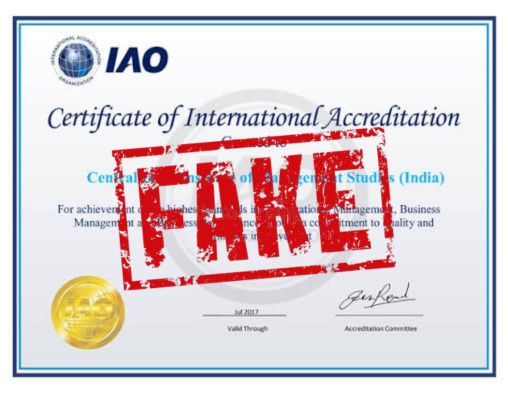
Current ownership is not transparently disclosed. The organization continues to operate a website (iao.org), social media presence, and lists of “accredited” institutions. Public profiles associate names such as Tom Goodman (listed in some business directories as Accreditation Director, Houston) with it, but no clear, independently verified corporate ownership or leadership details beyond the historical Axact connection are readily available in open sources. It is not recognized by legitimate higher-education quality-assurance networks (e.g., it does not appear among U.S. Department of Education-recognized accreditors or equivalent international bodies) and is frequently described by education watchdogs and commentators as an unrecognized or fraudulent accreditation mill.
Why We Are Warning the Public About IAO
After reviewing publicly available information, IAO appears to have serious red flags. It is listed by independent education-watch sources among fake or unrecognized accreditation agencies, and we could not find reliable evidence that it is recognized by major legitimate accreditation-recognition authorities such as CHEA, the U.S. Department of Education, ENQA, or a government-authorized quality assurance body.

Accreditation is meaningful only when the accrediting agency itself is recognized by a competent authority. A certificate from an unrecognized body can mislead students, doctors, institutions, and the public.
Public Sources Raising Concern About IAO
1. GetEducated list of fake accreditation agencies
GetEducated lists International Accreditation Organization (IAO) among “Fake College Accreditation Agencies.” It also states that the listed agencies are not recognized as college accreditors in the U.S. by CHEA or the U.S. Department of Education.
Link:
https://www.geteducated.com/college-degree-mills/204-fake-agencies-for-college-accreditation/
2. Al-Fanar Media investigation: “Faking Quality Control for Universities”
Al-Fanar Media published an investigative report describing IAO as a phony quality-control agency that gave a veneer of respectability to questionable institutions.
Link:
https://www.al-fanarmedia.org/2015/02/faking-quality-control-universities/
3. Reports connecting IAO with diploma-mill networks
Several public sources have discussed historical concerns connecting IAO with the Axact fake degree / diploma mill scandal.
Example source:
https://www.bircham.net/iao-international-accreditation-organization.html
4. CHEA recognized accrediting organizations
The Council for Higher Education Accreditation (CHEA) maintains information about recognized accrediting organizations. Institutions should verify whether any accreditor is recognized before relying on it.
Link:
https://www.chea.org/chea-recognized-accrediting-organizations
5. U.S. Department of Education accreditation database
The U.S. Department of Education provides a database for recognized accreditation information. Institutions should verify claims through official databases rather than relying only on certificates or marketing emails.
Link:
6.
"The International Accreditation Organisation (IAO) appears in Wikipedia's list of unrecognized higher education accreditation organizations. Independent sources such as GetEducated have listed IAO among fake accreditation agencies, and Al-Fanar Media has described it as a 'phony quality control agency.' Wikipedia itself describe IAO as 'fake'; it classifies it as an unrecognized accreditor."
The aim of the European Higher Education Monitoring Commission is to eliminate false accreditation associations, provide educational institutions in the European Union with all the information to combat false associations and thus avoid unpleasant situations.

The European Higher Education Monitoring Commission seeks to promote cooperation between the Member States of the European Union (EU) in order to further enhance the quality and inclusiveness of national education and training systems. It is not always a mistake that schools trust false accreditation associations, so below is a list of false accreditation associations.
https://www.ehemc.eu/list-of-false-associations/
IAO: The Fake Accreditation Agency Deceiving Institutions and Citizens
https://vidyapost.in/iao-the-fake-accreditation-agency-deceiving-institutions-and-citizens/The International Accreditation Organization (IAO) is widely classified by investigative reports and education watchdogs as an unrecognised, fraudulent accreditation mill rather than a legitimate academic quality-assurance body.
Is International Accreditation organinsation a fraud?
https://www.answers.com/law-and-legal-issues/Is_International_Accreditation_organinsation_a_fraudConsultant has Lost USD 7,000 to the International Accreditation Organization (IAO)
A LinkedIn user, A Anan, has publicly alleged that he lost USD 7,000 after paying the International Accreditation Organization (IAO) for accreditation services. According to his post, IAO assured him that his accreditation had been approved by the U.S. Department of Education.
https://www.linkedin.com/posts/a-anan-0a6481269_title-how-the-international-accreditation-activity-7039217056893857792-v3Pf/Investigative Findings and History
- The Axact Scandal: Investigations by The New York Times and Al-Fanar Media revealed that the IAO was operated as part of a massive network linked to Axact, a Pakistani software company that set up hundreds of fake online universities and phantom accreditation bodies to sell bogus degrees and certifications globally.
- Fake Physical Addresses: Reports found that the IAO and its affiliated "accredited" institutions listed verifiable-sounding foreign addresses (such as in Houston, Texas) that were entirely phony or nonexistent.
- Fake Official Recognition: The IAO holds no official recognition from the U.S. Department of Education or any other major, legitimate national higher-education authority, despite sometimes misleading applicants into believing otherwise.
Common Warning Signs and Complaints
- Upfront Fees for Status: Victims report paying thousands of dollars for "accreditation" approvals that offer no genuine academic standing or legal validity. [1]
- Evasive Communication: Institutions and individuals attempting to verify their accreditation status report ghosted communications, unfulfilled promises, and changing contact protocols after payments are made. [1]
- Inclusion on Fraud Lists: Educational boards and European higher-education coalitions routinely list the organization among known false associations and diploma mills.
Important Lesson for Institutions
Before paying any accreditation agency, ask these questions:
• Is the accrediting body recognized by a government authority?
• Is it listed by CHEA, the U.S. Department of Education, ENQA, or another accepted quality assurance framework?
• Does it have transparent governance, board members, standards, physical
Axact Corporation
Axact Corporation is a Pakistani IT/software company based in Karachi that became the center of one of the largest known diploma-mill (fake degree) frauds in history. Founded in 1997 by Shoaib Ahmed Shaikh, it publicly presented itself as a major global software firm while its primary revenue allegedly came from selling fraudulent academic credentials.
How the Fraud Worked
Axact operated a sophisticated network of websites that mimicked legitimate universities, high schools, and accreditation bodies. Key elements included:
- Hundreds of fake institutions: Investigations identified more than 370 associated websites, including approximately 145 fictitious universities, 41 high schools, 18 fake accreditation bodies (including the International Accreditation Organization), and over 100 degree portals. Examples included Belford University, Rochville University, Ashwood University, and Columbiana University.
- Call-center sales operation: Employees allegedly worked around the clock using Western-sounding aliases while posing as university officials. Victims, particularly in the Middle East, Gulf countries, and the United States, were persuaded through high-pressure sales tactics.
- Upselling additional services: Customers initially paid registration or tuition fees and were later charged additional amounts for “accreditation,” “legalization,” authentication, and supposed government verification. Some reportedly paid hundreds of thousands of dollars over time.
- Supporting infrastructure: Fake accreditation agencies, fabricated certificates, counterfeit seals, and shell companies were allegedly used to create an appearance of legitimacy and facilitate payments.
A 2024 Darknet Diaries podcast featured a former employee describing rapid creation of fake university websites, victim profiling using social media, and sophisticated psychological sales techniques.
Scale of the Fraud
Public reports describe the operation as one of the largest online education frauds ever uncovered.
- More than 215,000 people across approximately 197 countries were reportedly affected.
- U.S. prosecutors alleged the scheme generated at least US$140 million.
- Some investigations estimated annual revenues exceeding US$89 million, while others reported approximately US$51 million during 2015 alone.
- Academic analyses suggested total revenues may have reached several hundred million dollars over the lifetime of the operation.
- Large numbers of fake degrees were reportedly sold to individuals seeking employment, promotions, licensing, or immigration advantages.
Most reported revenue originated from the United Arab Emirates and other Gulf countries, where fraudulent credentials were allegedly used to obtain higher-paying positions.
Exposure and Investigations
In May 2015, The New York Times published an extensive investigation exposing the network. Pakistani authorities subsequently raided Axact offices in Karachi and Islamabad, seizing computers, blank degree certificates, official-looking seals, and other materials.
Investigations were also launched by:
- Federal Investigation Agency (FIA)
- Securities and Exchange Commission of Pakistan (SECP)
- Pakistani tax authorities
- Senate committees
Pakistan’s Chief Justice later described the scandal as a national embarrassment.
Axact denied the allegations, stating that it merely provided software and call-center services to third parties.
Legal Proceedings
United States
- Umair Hamid, Axact’s Assistant Vice President of International Relations, was arrested in 2016.
- He pleaded guilty to wire fraud, conspiracy, and aggravated identity theft.
- In 2017, he was sentenced to 21 months’ imprisonment and forfeited more than US$5 million.
Pakistan
- Shoaib Ahmed Shaikh and several employees faced criminal proceedings.
- In 2018, Shaikh and 22 employees were convicted.
- Reports differ regarding the exact sentence, with various sources citing prison terms ranging from 7 years to longer periods.
- In 2023, Shaikh was again arrested in connection with allegations involving judicial bribery related to earlier proceedings.
- Subsequent court decisions by the Sindh High Court and Islamabad High Court reportedly resulted in acquittals on certain charges.
Aftermath
Although the 2015 investigations disrupted the operation, reports indicated that related websites and entities continued to appear afterward. Axact continues to maintain a public presence as an IT company, although its public claims regarding size and operations have varied over time.
The scandal prompted governments, employers, and educational organizations worldwide to strengthen verification procedures for academic qualifications. Numerous education watchdogs continue to identify many Axact-linked universities and accreditation bodies as fraudulent or unrecognized.
Summary
The Axact case is widely regarded as one of the largest alleged diploma-mill operations ever exposed. According to investigative reports and court proceedings, the organization allegedly operated hundreds of fake universities and accreditation bodies, misleading individuals and institutions worldwide into purchasing degrees and accreditations that lacked recognized academic or regulatory value. The case remains one of the most significant examples of global academic credential fraud and underscores the importance of verifying accreditation through officially recognized government and quality assurance agencies before relying on any educational credential.
International Accreditation Organization (IAO)
The International Accreditation Organization (IAO) is discussed in connection with the wider diploma-mill ecosystem described in Darknet Diaries Episode 142: “Axact” (released February 6, 2024, approximately 53 minutes), hosted by Jack Rhysider. The episode focuses primarily on Axact and features testimony from a former employee (using the pseudonym “Fazal”), while also explaining how numerous fake universities and accreditation bodies allegedly operated together within the broader network.
Relationship Between IAO and the Axact Network
According to investigative reporting referenced in the podcast and other publicly available investigations, IAO was described as one of several accreditation organizations that allegedly provided an appearance of legitimacy to fake universities operated within the broader Axact ecosystem.
The episode explains how these accreditation bodies allegedly:
- Displayed professional-looking websites designed to resemble legitimate accreditation agencies.
- Claimed international recognition without recognized government or higher-education authority approval.
- Were listed alongside numerous fictitious universities to create an appearance of credibility.
- Helped convince prospective students and institutions that the universities were officially accredited.
How the Scheme Allegedly Worked
The podcast describes a broader operation in which:
- Fake university websites were rapidly created.
- Admissions personnel used Western-sounding names and professional titles.
- Victims were encouraged to purchase degrees and certifications.
- Additional fees were requested for accreditation, legalization, verification, authentication, and other official-looking documents.
- Accreditation organizations such as IAO allegedly formed part of the marketing infrastructure that increased credibility.
Public Investigations
The episode references investigations by The New York Times, particularly the reporting of Declan Walsh, which documented hundreds of websites associated with fake universities and accreditation bodies. Public reports have identified the International Accreditation Organization (IAO) as one of the accreditation agencies allegedly connected to that wider ecosystem.
Major Themes
The podcast highlights several broader lessons:
- The importance of verifying whether an accrediting agency is officially recognized.
- The ease with which professional websites can create false credibility.
- How fake accreditation can be used to persuade institutions and individuals to make payments.
- The need to verify accreditation through recognized authorities such as CHEA, the U.S. Department of Education, or other official national quality assurance agencies.
Summary
Although Darknet Diaries Episode 142 is primarily about Axact, it provides useful background for understanding how organizations such as the International Accreditation Organization (IAO) allegedly functioned within a broader network of fake universities and accreditation agencies. The episode reinforces the importance of independently verifying the recognition status of any accreditation body before relying on its certificates or paying accreditation fees.
No transparent, verifiable owner, CEO, or principal operator of the current IAO has been publicly identified in open sources. The organization maintains a low-profile online presence and does not disclose corporate ownership or a clear leadership hierarchy on its website or official materials.
Publicly Associated Names (LinkedIn / Business Directories)
Several individuals appear in business databases and LinkedIn profiles tied to IAO, mostly with “Accreditation Director,” “Accreditation Officer,” or “Head of Evaluation” titles and a Houston, Texas location. All these names are suspicious and not listed every where. These all are fake names listed. These include:
- Tom Goodman — Listed as Accreditation Director (profiles claim involvement since around 2007).
- Dr. Benjamin Miller — Listed as Accreditation Officer (same long-term Houston association).
- Austin Troy — Listed as Accreditation Director / Officer.
- Tom Costigan — Listed as Head of Evaluation Department.
- Mike Dennis (or Dr. Mike Dennis) — Referenced in some third-party pages as Head of the Evaluation Dept. (Europe, MENA & Asia), with an email in the form mdennis@iao.org.
These profiles are sparse, lack independent corroboration (e.g., detailed work history, publications, or media presence outside IAO contexts), and some claim continuous involvement dating back to the pre-2015 period when IAO was linked to Axact. This pattern is common among unrecognized accreditation entities and does not confirm that these individuals are the actual decision-makers or owners.
Physical Address and Business Footprint
IAO consistently uses the address 10685-B Hazelhurst Dr. #11524 (or similar suite numbers), Houston, TX 77043.
This is a private mailbox / virtual office / mail-forwarding location operated by services such as USA2Me (and similar providers). It is not a conventional office building with staff. Multiple unrelated entities worldwide use the same building and similar suite numbers for a U.S. mailing presence. The Better Business Bureau lists IAO at this address and notes that it is not BBB-accredited.
No matching active Texas corporation, LLC, or nonprofit registration under the exact name “International Accreditation Organization” with clear beneficial owners appears in easily accessible public Secretary of State records in recent searches. Older ZoomInfo entries occasionally reference a Massachusetts address (Chestnut Hill), but this does not appear current or primary.
Domain and Online Presence
- Website: iao.org (still active, promoting fake accreditation services and claiming thousands of accredited institutions).
- Social media: Instagram (@iao.global) and a Facebook page listing the fake Houston address and phone numbers such as (855) 523-7426 or (866) 276-8426.
- The organization claims to have resurfaced in 2017 with “no further links” to Axact after the 2015 shutdown of the original operation.
No WHOIS data publicly revealing a clear individual or corporate registrant with identifiable ownership was located in standard searches. Contact emails use the iao.org domain.
How to Report IAO If You Have Been Scammed: A Step-by-Step Guide
The internet has made it easier than ever to find information and services, but it has also become a breeding ground for fake websites, phishing scams, and fraudulent organisations. These websites often imitate legitimate institutions, use fake accreditation, or trick visitors into sharing personal information or making payments.
If you discover a suspicious website, reporting it quickly can help protect others from becoming victims.
What Is a Phishing Website like IAO?
A phishing website like International Accreditation Organization - IAO is a fraudulent website designed to deceive visitors into revealing sensitive information such as:
- Usernames and passwords
- Credit or debit card details
- Bank account information
- Passport or identity documents
- Personal contact information
Some fake websites also falsely claim affiliations, certifications, or accreditation to gain credibility and persuade users to pay fees or purchase services. National Cyber Security Centre
Warning Signs of a Fake Website
Be cautious if a website:
- Claims government recognition without verifiable evidence.
- Uses fake accreditation or certification logos.
- Requests urgent payments for certificates or approvals.
- Provides vague or unverifiable contact information.
- Has copied content from other websites.
- Uses misleading testimonials or fake reviews.
- Makes unrealistic promises or guarantees.
- Has spelling, grammatical, or formatting errors.
- Uses suspicious payment methods.
- Refuses to provide legal registration details.
Before Filing a Complaint
Gather as much evidence as possible, including:
- Website URL
- Screenshots of relevant pages
- Emails exchanged
- Payment receipts
- Bank transaction records
- Chat conversations
- Advertisements
- Copies of certificates or documents
- WHOIS domain information (if available)
Preserving evidence makes investigations much easier.
Where to Report a Fake or Phishing Website
1. Google Safe Browsing
If the website appears in Google Search or Chrome, report it to Google Safe Browsing.
This helps protect millions of users by displaying browser warnings for malicious sites.
2. Microsoft Defender SmartScreen
Report suspicious websites to Microsoft so they can be blocked in Microsoft Edge and Windows Defender.
3. Anti-Phishing Working Group (APWG)
APWG is an international coalition of:
- Security companies
- Banks
- Internet service providers
- Law enforcement agencies
It collects phishing reports from around the world.
4. Domain Registrar
Every website is registered through a domain registrar.
Using a WHOIS lookup, identify the registrar and submit an abuse complaint.
Most registrars have abuse departments that investigate phishing, impersonation, and fraud.
5. Web Hosting Company
If the hosting provider is identified, report the abuse directly.
Hosting companies often suspend websites that violate their Terms of Service.
6. Cloudflare or CDN Providers
If the website uses Cloudflare or another content delivery network, submit an abuse report.
Although CDNs usually do not host the website, they may notify the hosting provider or assist in abuse investigations.
7. National Cybercrime Agency
Most countries have official cybercrime reporting portals.
Examples include:
- FBI Internet Crime Complaint Center (IC3) – United States
- National Cyber Security Centre (NCSC) – United Kingdom
- National cybercrime reporting portals in many other countries
Government agencies can investigate large-scale phishing operations and coordinate website takedowns. NCSC Report
8. Local Police
If you have lost money or believe a crime has been committed, file a police complaint.
Provide:
- Website address
- Financial transactions
- Emails
- Screenshots
- Names of individuals involved (if known)
Reporting Fake Academic Accreditation
If a website falsely claims educational accreditation, notify:
- The relevant Ministry or Department of Education
- National higher education regulators
- Consumer protection authorities
- Professional councils (if applicable)
In the United States, you can verify recognised accrediting agencies through the U.S. Department of Education and the Council for Higher Education Accreditation (CHEA) before relying on accreditation claims.
Reporting to Search Engines
Report deceptive websites to:
- Microsoft Bing
Search engines may reduce visibility or display warnings after reviewing credible reports.
Reporting to Browser Security Services
Major browsers maintain phishing databases.
You can report websites to:
- Google Safe Browsing
- Microsoft SmartScreen
Once verified, users may see warnings before visiting the site.
Reporting to Payment Providers
If the website accepts payments through:
- Visa
- Mastercard
- PayPal
- Stripe
you may also report suspected fraud to the payment processor. Repeated complaints can result in merchant account reviews or suspension.
Reporting to Social Media Platforms
If the fake website is promoted through:
- X (formerly Twitter)
- YouTube
report the associated accounts for fraud or impersonation.
Writing an Effective Complaint
Include:
- Website address
- Nature of the complaint
- Dates of interaction
- Evidence attached
- Financial losses (if any)
- Why you believe the website is deceptive
- Any false claims made by the website
Keep your complaint factual and avoid unsupported accusations.
Protect Yourself
If you have already interacted with a suspicious website:
- Change all passwords immediately.
- Enable multi-factor authentication.
- Contact your bank if payment details were shared.
- Monitor financial accounts for unusual activity.
- Run a malware scan on your device.
- Report identity theft if personal documents were compromised.
Final Thoughts
Reporting fake or phishing websites helps protect individuals, businesses, and educational institutions from online fraud. Many successful website takedowns begin with reports from ordinary internet users. By documenting evidence carefully and reporting to the appropriate authorities, registrars, hosting providers, and cybersecurity organisations, you can help reduce cybercrime and prevent others from becoming victims. Official cybersecurity organisations encourage reporting suspicious websites even if you are unsure they are malicious, as each report contributes to broader threat detection and public protection. National Cyber Security Centre








