BASIC INFORMATION
Date & Time: 18 June 2026, 7:03:52 PM Indian Standard Time
Lecture Handout Prepared from the Teaching Session by: Dr. R. K. Mishra
SUMMARY
Adrenalectomy is the surgical removal of one or both adrenal glands and is performed for selected adrenal disorders, particularly those associated with hormonal hypersecretion or adrenal masses. Approximately 3,000 adrenalectomies are performed annually in the United States. The laparoscopic retroperitoneoscopic approach is emphasized as a preferred minimally invasive technique because it is associated with reduced recovery time, a typical hospital stay of 1–2 days, and a complication rate of approximately 5–10%.
Adrenal disorders commonly arise from disturbances in hormone production, including excess cortisol in Cushing syndrome and excess aldosterone in primary aldosteronism. These hormonal abnormalities can produce hypertension, hypokalemia, glucose intolerance, metabolic alkalosis, osteoporosis, and characteristic physical findings such as truncal obesity and purple striae. The hypothalamic-pituitary-adrenal axis is central to adrenal physiology, and disruption of feedback regulation contributes to disease development.
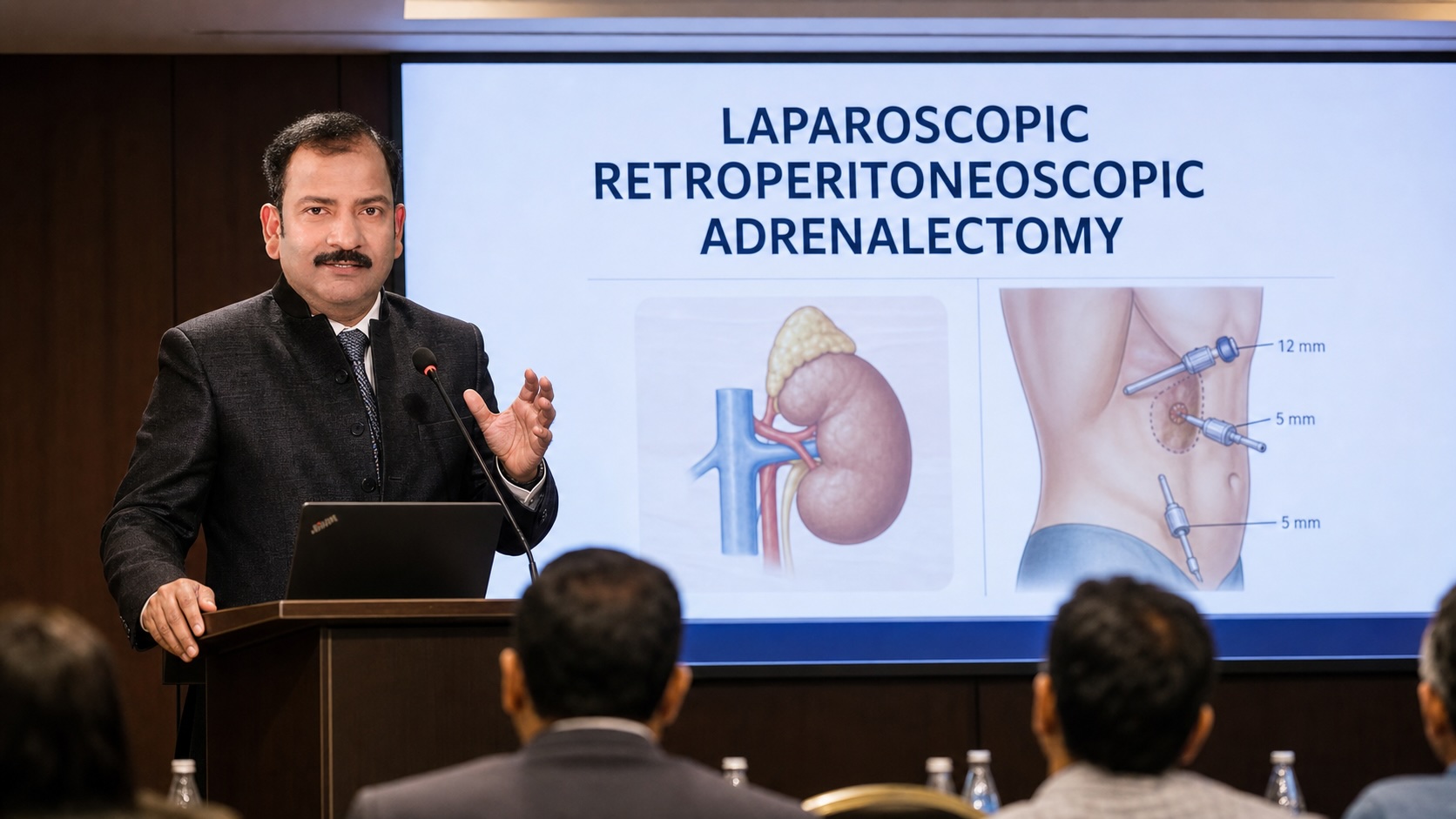
Diagnosis requires a combination of clinical assessment, laboratory testing, and imaging. The dexamethasone suppression test has a reported sensitivity of 95% and specificity of 90% for Cushing syndrome using a cortisol cutoff of 5 micrograms per deciliter. Computed tomography is the preferred imaging modality for adrenal masses, with a sensitivity of 95% and specificity of 90%. Fine needle aspiration biopsy may assist in diagnosing adrenal malignancy, with an accuracy of 90% and a complication rate of 1–2%.
Management is multidisciplinary and includes surgeons, endocrinologists, and radiologists. Surgical removal of the affected adrenal gland is a key management strategy, particularly in primary aldosteronism, where surgical success is reported at 90%. Medical therapy may be required for hormonal control, including ketoconazole for Cushing syndrome and hydrocortisone for adrenal insufficiency or adrenal crisis. Special considerations include pregnancy, chronic kidney disease, hepatic impairment, and individualized dose adjustment.
Complications discussed include adrenal crisis, hypertension, hypokalemia, adrenal insufficiency after adrenalectomy, and adrenal malignancy. Adrenal crisis requires urgent recognition and treatment with hydrocortisone. Patient education, regular follow-up, monitoring of blood pressure and electrolytes, medication adherence, and recognition of warning signs are essential for safe outcomes.
KEY KNOWLEDGE POINTS
-
Adrenalectomy involves removal of one or both adrenal glands.
-
Laparoscopic retroperitoneoscopic adrenalectomy is a minimally invasive approach with shorter recovery and hospital stay.
-
Approximately 3,000 adrenalectomies are performed annually in the United States.
-
Adrenal incidentalomas occur in approximately 4.2% of patients undergoing abdominal computed tomography scans.
-
The global incidence of adrenal disorders is estimated at approximately 1 in 10,000 people.
-
Adrenal disorders frequently involve hormonal imbalance, especially cortisol and aldosterone excess.
-
Cushing syndrome is characterized by excess cortisol production.
-
Primary aldosteronism is characterized by excess aldosterone production.
-
The dexamethasone suppression test is an important diagnostic test for Cushing syndrome.
-
Computed tomography has high sensitivity and specificity for detecting adrenal masses.
-
Fine needle aspiration biopsy may be useful for diagnosing adrenal malignancy.
-
Laparoscopic adrenalectomy has a complication rate of 5–10% and a mortality rate of 0.5–1%.
-
Hospital stay after laparoscopic adrenalectomy is usually 1–2 days.
-
Recovery time is usually 1–2 weeks.
-
Adrenal insufficiency after adrenalectomy occurs in 10–20% of patients.
-
Adrenal crisis is a life-threatening condition requiring urgent hydrocortisone therapy.
-
Multidisciplinary care involving surgery, endocrinology, and radiology is recommended.
-
Osilodrostat is an emerging therapy for Cushing syndrome.
-
Patient education and regular monitoring are essential to reduce complications.
INTRODUCTION
The adrenal glands are paired endocrine organs located superior to the kidneys. They produce hormones essential for regulation of metabolism, blood pressure, electrolyte balance, and stress response, including cortisol, aldosterone, and adrenaline. Disorders of the adrenal glands may lead to either hormonal excess or deficiency and can present with significant systemic manifestations.
Adrenalectomy is an important surgical procedure in the management of adrenal disorders. Surgical intervention is commonly indicated when there is hormonal hypersecretion, suspicion of malignancy, or clinically significant adrenal mass. The lecture emphasizes laparoscopic retroperitoneoscopic adrenalectomy as a preferred minimally invasive technique because of reduced recovery time, limited hospital stay, and acceptable complication rates.
The clinical importance of adrenal disorders lies in their potentially serious presentations, including severe hypertension, hypokalemia, adrenal crisis, and adrenal malignancy. Accurate diagnosis, appropriate patient selection, meticulous perioperative planning, and multidisciplinary management are essential for optimal outcomes.
LEARNING OBJECTIVES
-
Understand the epidemiology, pathophysiology, and clinical presentation of adrenal disorders requiring evaluation for adrenalectomy.
-
Describe the diagnostic approach to adrenal disorders, including laboratory testing, imaging, and biopsy where appropriate.
-
Explain the role of laparoscopic retroperitoneoscopic adrenalectomy in the management of adrenal disease.
-
Recognize major complications including adrenal crisis, adrenal insufficiency, hypertension, and hypokalemia.
-
Identify key patient selection, medicolegal, and safety considerations in adrenal surgery.
CORE CONTENT
1. Overview of Adrenalectomy
1.1 Definition
Adrenalectomy is a surgical procedure involving removal of one or both adrenal glands. It is performed for adrenal disorders associated with hormone excess, adrenal masses, or suspected malignancy.
1.2 Surgical Approach
The lecture highlights laparoscopic retroperitoneoscopic adrenalectomy as a preferred minimally invasive approach. This technique is associated with:
-
Reduced recovery time
-
Hospital stay of 1–2 days
-
Recovery period of 1–2 weeks
-
Complication rate of 5–10%
-
Mortality rate of 0.5–1%
1.3 Procedural Volume and Cost
Approximately 3,000 adrenalectomies are performed annually in the United States. The average cost of laparoscopic adrenalectomy is approximately 20,000 dollars per procedure, with a reported cost-effectiveness ratio of 10,000 dollars per quality-adjusted life year.
2. Epidemiology of Adrenal Disorders
2.1 Incidence
The estimated global incidence of adrenal disorders is approximately 1 in 10,000 people. Adrenal incidentalomas are detected in approximately 4.2% of patients undergoing abdominal computed tomography scans.
2.2 Age and Sex Distribution
Adrenal disorders may occur across a wide age range, from 20 to 80 years. Peak incidence occurs between 40 and 60 years. The sex distribution is slightly female predominant, with a male-to-female ratio of approximately 1:1.2.
2.3 Risk Factors
Modifiable risk factors include:
-
Hypertension, relative risk 2.5
-
Obesity, relative risk 1.8
-
Family history, relative risk 3.0
Non-modifiable risk factors include:
-
Age, relative risk 1.5 per decade
-
Female sex, relative risk 1.2
-
Genetic mutations, relative risk 5.0
3. Adrenal Physiology and Pathophysiology
3.1 Hormonal Function of the Adrenal Glands
The adrenal glands produce several hormones, including:
-
Cortisol
-
Aldosterone
-
Adrenaline
These hormones regulate blood pressure, electrolyte balance, metabolism, and stress response.
3.2 Hypothalamic-Pituitary-Adrenal Axis
Hormone production is regulated by the hypothalamic-pituitary-adrenal axis through feedback interactions between the hypothalamus, pituitary gland, and adrenal glands. In adrenal disorders, this feedback loop is disrupted, leading to excess or deficient hormone production.
3.3 Cushing Syndrome
Cushing syndrome is caused by overproduction of cortisol. Clinical consequences include:
-
Hypertension
-
Glucose intolerance
-
Osteoporosis
-
Weight gain
-
Truncal obesity
-
Purple striae
3.4 Primary Aldosteronism
Primary aldosteronism is characterized by excess aldosterone secretion. Clinical consequences include:
-
Hypertension
-
Hypokalemia
-
Metabolic alkalosis
Mutations in the KCNJ5 gene are reported in 40% of patients with primary aldosteronism.
4. Clinical Presentation
4.1 Cushing Syndrome
The classic presentation of Cushing syndrome includes:
-
Weight gain in 80% of patients
-
Hypertension in 70% of patients
-
Glucose intolerance in 60% of patients
-
Truncal obesity
-
Purple striae
Purple striae are associated with excess cortisol, which causes skin thinning and fragility.
4.2 Primary Aldosteronism
The classic presentation of primary aldosteronism includes:
-
Hypertension in 90% of patients
-
Hypokalemia in 50% of patients
-
Metabolic alkalosis in 40% of patients
4.3 Atypical Presentations
Atypical symptoms may occur, particularly in elderly patients, diabetic patients, and immunocompromised patients. These symptoms include:
-
Fatigue
-
Weakness
-
Weight loss
4.4 Red Flag Findings
Red flags requiring immediate action include:
-
Severe hypertension
-
Severe hypokalemia
-
Adrenal crisis
These conditions may be life-threatening if not promptly treated.
5. Diagnostic Evaluation
5.1 Diagnostic Algorithm
The diagnostic approach begins with:
-
Thorough medical history
-
Physical examination
-
Laboratory testing
-
Imaging studies
5.2 Laboratory Tests
Important laboratory tests include:
-
Dexamethasone suppression test
-
Cortisol measurement
-
Aldosterone measurement
5.3 Reference Ranges
The lecture provides the following reference ranges:
-
Cortisol: 5–20 micrograms per deciliter
-
Aldosterone: 2–9 nanograms per deciliter
5.4 Diagnostic Performance
Dexamethasone suppression test:
-
Sensitivity: 95%
-
Specificity: 90%
-
Cortisol cutoff for Cushing syndrome: 5 micrograms per deciliter
Cortisol measurement:
-
Sensitivity: 80%
-
Specificity: 90%
Aldosterone measurement:
-
Sensitivity: 90%
-
Specificity: 80%
5.5 Imaging
Computed tomography is the modality of choice for detecting adrenal masses and guiding surgical management.
Computed tomography performance:
-
Sensitivity: 95%
-
Specificity: 90%
Magnetic resonance imaging may also be used in evaluation.
5.6 Fine Needle Aspiration Biopsy
Fine needle aspiration biopsy may be used in selected cases to diagnose adrenal malignancy.
Performance and risk:
-
Accuracy: 90%
-
Complication rate: 1–2%
5.7 Differential Diagnosis
Differential diagnoses include other causes of hypertension and hypokalemia, such as:
-
Renal disease
-
Hyperthyroidism
5.8 Scoring Systems
The lecture mentions the Wells score as a validated scoring system for assessing the likelihood of adrenal malignancy, with a score of 2 or more indicating high likelihood. The Cushing Syndrome Severity Score may help assess hormonal imbalance and guide management.
6. Management and Treatment
6.1 Multidisciplinary Care
Management of adrenal disorders requires a multidisciplinary approach involving:
-
Surgery
-
Endocrinology
-
Radiology
The Endocrine Society recommends thorough evaluation of all patients with adrenal incidentalomas, including laboratory testing and imaging studies to determine hormonal hypersecretion.
6.2 Surgical Management
Surgical removal of the affected gland is a primary management strategy for appropriate adrenal disorders. The American Association of Clinical Endocrinologists recommends surgical removal of the affected adrenal gland in patients with primary aldosteronism, with a reported success rate of 90%.
6.3 Acute Management of Adrenal Crisis
Adrenal crisis requires emergency stabilization and immediate treatment.
Hydrocortisone regimen discussed:
-
Hydrocortisone 100–200 mg
-
Frequency: every 6–8 hours
Monitoring parameters include:
-
Blood pressure
-
Electrolyte levels
-
Glucose levels
6.4 Management of Severe Hypertension
In severe hypertension, the lecture mentions nifedipine.
Dose discussed:
-
Nifedipine 10–20 mg orally
-
Frequency: every 6–8 hours
6.5 Pharmacotherapy for Cushing Syndrome
Ketoconazole is discussed as a first-line medication for inhibiting excess cortisol production in Cushing syndrome.
Dose discussed:
-
Ketoconazole 200–400 mg orally
-
Frequency: every 12 hours
Expected response timeline:
-
Several weeks to several months
Monitoring parameters include:
-
Cortisol levels
-
Blood pressure
-
Glucose levels
The lecture cites clinical trial data demonstrating a response rate of 80% and remission rate of 50%.
6.6 Adrenal Insufficiency
Adrenal insufficiency after adrenalectomy is reported in 10–20% of patients. The risk of adrenal crisis is 1–2%.
Hydrocortisone replacement dose discussed:
-
Hydrocortisone 15–20 mg per day
-
Frequency: 2–3 times per day
7. Special Patient Groups
7.1 Pregnancy
The safety category for medications used in adrenal disorders during pregnancy is described as typically C or D. Dose adjustment of 50–75% is recommended.
Preferred agent discussed:
-
Hydrocortisone 10–20 mg orally
-
Frequency: every 12 hours
7.2 Chronic Kidney Disease
Dose adjustment according to glomerular filtration rate was discussed as follows:
-
GFR 30–50 mL/min: 50–75% of normal dose
-
GFR 15–30 mL/min: 25–50% of normal dose
-
GFR less than 15 mL/min: 10–25% of normal dose
7.3 Hepatic Impairment
Dose adjustment according to Child-Pugh class was discussed as follows:
-
Child-Pugh A: 100% of normal dose
-
Child-Pugh B: 50–75% of normal dose
-
Child-Pugh C: 25–50% of normal dose
8. Prognosis
8.1 Adrenal Cancer
The five-year survival rate for adrenal cancer is 50–60%, with a median survival time of 2–3 years.
8.2 Mortality Data
The lecture provides the following mortality data for adrenal disorders:
-
Thirty-day mortality: 1–5%
-
One-year mortality: 5–10%
-
Five-year mortality: 10–20%
8.3 Poor Prognostic Factors
Factors associated with poor outcome include:
-
Older age
-
Presence of comorbidities
-
Delayed diagnosis
8.4 Escalation of Care
Referral to a specialist is required in cases of:
-
Adrenal crisis
-
Severe hypertension
-
Adrenal malignancy
Intensive care unit admission criteria include:
-
Adrenal crisis
-
Severe hypertension
-
Respiratory failure
9. Recent Advances and Emerging Therapies
9.1 New Drug Therapy
Osilodrostat is discussed as an emerging therapy for Cushing syndrome. It has been shown to reduce cortisol levels and improve symptoms.
9.2 Updated Guidelines
Updated guidelines from the Endocrine Society for diagnosis and treatment of adrenal disorders were discussed.
9.3 Novel Biomarkers
Measurement of cortisol and aldosterone levels is emphasized as useful in diagnosis and monitoring.
9.4 Precision Medicine
Genetic testing may assist in guiding treatment and predicting response to therapy.
9.5 Emerging Surgical Techniques
Robotic surgery is discussed as an emerging surgical technique that may improve outcomes and reduce complications.
10. Patient Education and Counseling
10.1 Key Patient Messages
Patients should understand the importance of:
-
Adherence to medication regimens
-
Monitoring blood pressure
-
Monitoring electrolyte levels
-
Seeking urgent medical attention in adrenal crisis
10.2 Medication Adherence
Strategies to improve medication adherence include:
-
Pillboxes
-
Reminder systems
10.3 Warning Signs Requiring Immediate Medical Attention
Patients should seek urgent care for:
-
Severe hypertension
-
Hypokalemia
-
Symptoms suggestive of adrenal crisis
10.4 Follow-Up Schedule
Follow-up recommendations include:
-
Regular endocrinology appointments every 3–6 months
-
Regular laboratory testing every 1–3 months
SURGICAL PEARLS
-
Carefully evaluate all adrenal incidentalomas with laboratory testing and imaging before deciding on surgery.
-
Do not miss primary aldosteronism in patients with hypertension and hypokalemia; failure to measure aldosterone is a common diagnostic pitfall.
-
Distinguish Cushing syndrome from primary aldosteronism by identifying the dominant hormone excess: cortisol in Cushing syndrome and aldosterone in primary aldosteronism.
-
Recognize adrenal crisis early; adrenal insufficiency is a must-not-miss diagnosis.
-
Use computed tomography as the main imaging modality for adrenal masses because of its high sensitivity and specificity.
-
Anticipate adrenal insufficiency after adrenalectomy and monitor appropriately.
-
Multidisciplinary planning with endocrinology, radiology, and surgery improves safety and individualizes care.
-
In patients with severe hypertension, hypokalemia, or adrenal crisis, escalate care without delay.
ANESTHETIC AND PHYSIOLOGICAL CONSIDERATIONS
The lecture emphasizes physiological considerations related to adrenal hormone excess and deficiency. Adrenal disorders can significantly affect blood pressure, electrolyte balance, glucose metabolism, and stress response.
Key physiological concerns include:
-
Hypertension due to cortisol or aldosterone excess
-
Hypokalemia in primary aldosteronism
-
Glucose intolerance in Cushing syndrome
-
Adrenal insufficiency after adrenalectomy
-
Adrenal crisis requiring urgent hydrocortisone therapy
Monitoring parameters discussed include:
-
Blood pressure
-
Electrolyte levels
-
Glucose levels
-
Cortisol levels where appropriate
COMPLICATIONS AND THEIR MANAGEMENT
Intraoperative
The lecture does not provide specific intraoperative technical complications. General operative safety points include careful patient selection, adequate preoperative biochemical diagnosis, and multidisciplinary planning.
Early Postoperative
Adrenal insufficiency
-
Incidence after adrenalectomy: 10–20%
-
Risk of adrenal crisis: 1–2%
-
Management: hydrocortisone replacement, 15–20 mg per day in 2–3 divided doses
Adrenal crisis
-
Incidence: 1–2%
-
Mortality: 10–20%
-
Management: hydrocortisone 100–200 mg every 6–8 hours with monitoring of blood pressure, electrolytes, and glucose
Hypertension
-
Incidence in adrenal disorders: 70–90%
-
Management includes antihypertensive therapy when severe; nifedipine 10–20 mg orally every 6–8 hours was discussed
Hypokalemia
-
Incidence: 30–50%
-
Requires prompt recognition and correction with monitoring
Late Postoperative
Persistent or recurrent endocrine abnormality
Patients require continued endocrine follow-up and serial laboratory monitoring.
Adrenal malignancy prognosis
-
Five-year survival: 50–60%
-
Median survival: 2–3 years
Long-term monitoring
-
Endocrinology review every 3–6 months
-
Laboratory testing every 1–3 months
MEDICOLEGAL AND PATIENT SELECTION CONSIDERATIONS
Appropriate patient selection is essential in adrenal surgery. Every adrenal incidentaloma should undergo thorough evaluation to determine hormonal activity and assess malignant potential. Failure to diagnose hormonal hypersecretion, particularly primary aldosteronism or Cushing syndrome, may expose the patient to preventable morbidity.
Important safety and decision-making points include:
-
Document clinical presentation, hormonal workup, and imaging findings before surgery.
-
Evaluate for cortisol and aldosterone excess when clinically indicated.
-
Recognize that severe hypertension, hypokalemia, and adrenal crisis require urgent intervention.
-
Use a multidisciplinary approach involving surgery, endocrinology, and radiology.
-
Discuss expected outcomes, complication rates, hospital stay, recovery time, and risk of adrenal insufficiency with the patient.
-
Ensure follow-up planning for endocrine monitoring after adrenalectomy.
-
Escalate care promptly in suspected adrenal crisis, adrenal malignancy, severe hypertension, or respiratory failure.
SUMMARY AND TAKE-HOME MESSAGES
-
Laparoscopic retroperitoneoscopic adrenalectomy is a minimally invasive approach associated with short hospital stay, rapid recovery, and acceptable complication rates.
-
Adrenal disorders require careful biochemical and radiological evaluation before surgical decision-making.
-
Cushing syndrome is caused by cortisol excess, while primary aldosteronism is caused by aldosterone excess.
-
Computed tomography is the preferred imaging modality for adrenal masses, with high sensitivity and specificity.
-
Adrenal crisis, severe hypertension, and hypokalemia are red flags requiring immediate action.
-
Adrenal insufficiency after adrenalectomy must be anticipated and treated with hydrocortisone when indicated.
-
Multidisciplinary care and patient education are essential for safe, evidence-based management.
MULTIPLE CHOICE QUESTIONS (MCQs)
1. What is adrenalectomy?
A. Surgical removal of the thyroid gland
B. Surgical removal of one or both adrenal glands
C. Surgical removal of the pancreas
D. Surgical removal of the spleen
Correct Answer: B
2. Which adrenalectomy approach was emphasized as preferred because of its minimally invasive nature?
A. Open transperitoneal adrenalectomy
B. Laparoscopic retroperitoneoscopic adrenalectomy
C. Thoracoabdominal adrenalectomy
D. Percutaneous adrenal ablation
Correct Answer: B
3. Approximately how many adrenalectomies are performed annually in the United States?
A. 300
B. 1,000
C. 3,000
D. 30,000
Correct Answer: C
4. What is the typical hospital stay after laparoscopic adrenalectomy according to the lecture?
A. Same-day discharge only
B. 1–2 days
C. 5–7 days
D. 10–14 days
Correct Answer: B
5. What is the reported complication rate for laparoscopic adrenalectomy?
A. 1–2%
B. 5–10%
C. 20–30%
D. 40–50%
Correct Answer: B
6. What is the approximate incidence of adrenal incidentalomas in patients undergoing abdominal CT scans?
A. 0.4%
B. 4.2%
C. 14.2%
D. 42%
Correct Answer: B
7. Which hormone is overproduced in Cushing syndrome?
A. Aldosterone
B. Cortisol
C. Thyroxine
D. Insulin
Correct Answer: B
8. Which hormone is overproduced in primary aldosteronism?
A. Cortisol
B. Aldosterone
C. Growth hormone
D. Prolactin
Correct Answer: B
9. Which clinical feature is classically associated with primary aldosteronism?
A. Hypokalemia
B. Hypercalcemia
C. Bradycardia
D. Hypoglycemia
Correct Answer: A
10. What is the cortisol cutoff discussed for the dexamethasone suppression test in diagnosing Cushing syndrome?
A. 1 microgram per deciliter
B. 3 micrograms per deciliter
C. 5 micrograms per deciliter
D. 20 micrograms per deciliter
Correct Answer: C
11. What is the sensitivity of the dexamethasone suppression test discussed in the lecture?
A. 50%
B. 70%
C. 80%
D. 95%
Correct Answer: D
12. What is the imaging modality of choice for detecting adrenal masses according to the lecture?
A. Plain radiography
B. Computed tomography
C. Echocardiography
D. Barium study
Correct Answer: B
13. What is the sensitivity of CT scans for detecting adrenal masses as discussed?
A. 60%
B. 75%
C. 85%
D. 95%
Correct Answer: D
14. What is the reported accuracy of fine needle aspiration biopsy for diagnosing adrenal malignancy?
A. 50%
B. 70%
C. 90%
D. 100%
Correct Answer: C
15. Which condition is described as a must-not-miss diagnosis in adrenal crisis?
A. Hyperthyroidism
B. Adrenal insufficiency
C. Renal colic
D. Cholecystitis
Correct Answer: B
16. What hydrocortisone dose was discussed for adrenal crisis?
A. 5–10 mg once daily
B. 15–20 mg per day
C. 100–200 mg every 6–8 hours
D. 500 mg once weekly
Correct Answer: C
17. What is the recommended daily hydrocortisone dose discussed for adrenal insufficiency?
A. 1–2 mg per day
B. 5 mg per week
C. 15–20 mg per day
D. 100–200 mg per day indefinitely
Correct Answer: C
18. Which medication was discussed as first-line pharmacotherapy for Cushing syndrome?
A. Nifedipine
B. Ketoconazole
C. Insulin
D. Levothyroxine
Correct Answer: B
19. Which emerging therapy was discussed for Cushing syndrome?
A. Osilodrostat
B. Warfarin
C. Metformin
D. Amiodarone
Correct Answer: A
20. What is a common diagnostic pitfall in primary aldosteronism?
A. Failure to measure aldosterone levels
B. Overuse of chest radiography
C. Failure to measure serum amylase
D. Misdiagnosis as appendicitis
Correct Answer: A
MOTIVATIONAL MESSAGE FROM DR. R. K. MISHRA
“Precision in surgery begins long before the incision; it begins with disciplined evaluation, sound judgment, and respect for patient safety.”
My best wishes to all postgraduate surgeons and gynecologists. Continue to learn with dedication, operate with responsibility, and place patient welfare at the center of every decision.