BASIC INFORMATION
Date & Time: 16 June 2026, 5:40 PM IST
Lecture Handout Prepared from the Teaching Session by: Dr. R. K. Mishra
SUMMARY
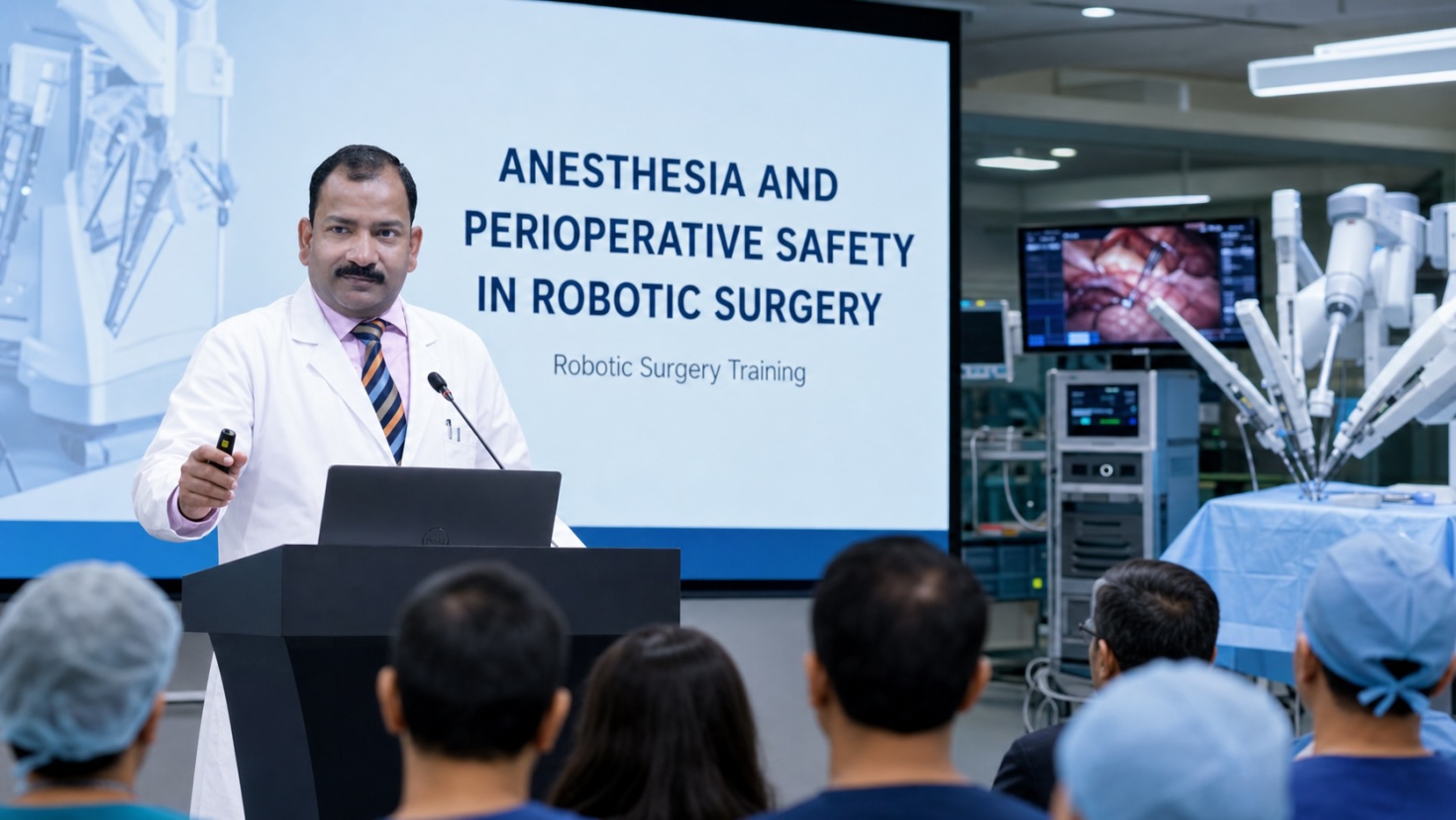
This lecture discusses the anesthetic and perioperative management of patients undergoing robotic surgery, with emphasis on physiology, ventilation, positioning, airway safety, vascular access, fluid management, and program-level safety systems. Robotic surgery creates unique anesthetic challenges because of pneumoperitoneum, steep Trendelenburg positioning, prolonged operative duration, restricted access to the patient after docking, and the need for precise coordination among the surgical, anesthesia, and nursing teams.
The lecture explains the cardiovascular and pulmonary effects of pneumoperitoneum, including alterations in venous return, preload, blood pressure, heart rate, mean arterial pressure, carbon dioxide absorption, respiratory acidosis, decreased lung compliance, reduced functional residual capacity, and increased airway pressures. Particular attention is given to obese patients, who are at greater risk of difficult ventilation, postoperative desaturation, obstructive sleep apnea-related complications, and airway edema.
Ventilation strategies are discussed in detail, including volume-controlled ventilation, pressure-controlled ventilation, and pressure control ventilation with volume guarantee. The lecture emphasizes conservative tidal volume ventilation based on ideal body weight, routine use of positive end-expiratory pressure, recruitment maneuvers, assessment of plateau pressure, and careful monitoring of delivered tidal volume when compliance changes.
The lecture also addresses fluid restriction, interpretation of low intraoperative urine output, prevention of corneal abrasions, extubation precautions, thoracic robotic surgery considerations, head and neck robotic airway issues, obstructive sleep apnea screening, vascular access planning, positioning-related nerve injuries, and Lean Six Sigma methods for improving robotic surgery programs. Safe robotic anesthesia requires disciplined preparation, standardized protocols, individualized decision-making, and continuous vigilance before and after robot docking.
KEY KNOWLEDGE POINTS
-
Robotic surgery presents unique anesthetic challenges due to pneumoperitoneum, steep Trendelenburg positioning, prolonged duration, and restricted access after docking.
-
Small preoperative or early intraoperative concerns can become major complications if not corrected promptly.
-
Pneumoperitoneum produces complex cardiovascular effects, including phasic changes in preload, venous return, blood pressure, heart rate, and mean arterial pressure.
-
Carbon dioxide absorption during pneumoperitoneum can produce respiratory acidosis independent of simple hypoventilation.
-
Steep Trendelenburg positioning and pneumoperitoneum create restrictive pulmonary physiology with decreased lung compliance and reduced functional residual capacity.
-
Obese patients are particularly vulnerable to ventilation difficulty, rapid postoperative desaturation, obstructive sleep apnea-related complications, facial edema, and airway edema.
-
Plateau pressure is more relevant than peak airway pressure when assessing alveolar pressure and risk of barotrauma.
-
Positive end-expiratory pressure should be used in every patient undergoing robotic surgery.
-
Conservative tidal volume ventilation should be based on ideal body weight rather than actual body weight.
-
Pressure control ventilation may improve ventilation-perfusion matching but can cause hypoventilation if compliance worsens.
-
Pressure control ventilation with volume guarantee may combine pressure control characteristics with reliable tidal volume delivery.
-
Recruitment maneuvers and aggressive positive end-expiratory pressure may reduce postoperative respiratory and non-respiratory complications.
-
Excessive crystalloid administration worsens facial and upper airway edema in steep Trendelenburg cases.
-
Low urine output during robotic surgery should not automatically be treated with aggressive fluid administration.
-
Corneal abrasions may be reduced by applying ophthalmic ointment before protective eye dressing.
-
Extubation should be cautious and preferably performed when the patient is very awake, especially after prolonged Trendelenburg positioning.
-
Visible facial edema should raise concern for posterior oropharyngeal and possible laryngeal edema.
-
Brachial plexus injury is an important positioning-related and medicolegal complication; padding shoulder braces does not eliminate risk.
-
Thoracic robotic surgery requires meticulous positioning, reliable lung isolation, and reassessment of double-lumen tube position after final positioning.
-
Lean Six Sigma principles, standardized work, team communication, and continuous quality improvement improve robotic surgery safety and efficiency.
INTRODUCTION
Robotic surgery has become an important part of modern minimally invasive surgery across multiple specialties, including gynecology, genitourinary surgery, oncology, colorectal surgery, general surgery, plastic surgery, thoracic surgery, ENT surgery, and combined skull base procedures. Although robotic platforms provide surgical precision and improved access to difficult anatomical regions, they introduce specific anesthetic and perioperative challenges.
Unlike many open procedures, robotic operations often require prolonged operative time, pneumoperitoneum, steep Trendelenburg or lateral positioning, limited physical access to the patient after docking, and complex equipment arrangement. These factors influence cardiovascular physiology, respiratory mechanics, airway safety, vascular access, monitoring, and postoperative recovery.
The anesthesiologist must anticipate physiological deterioration before it occurs. A minor preoperative concern, if ignored, may become a major intraoperative problem once the patient is positioned, the robot is docked, and access becomes restricted. Robotic surgery therefore requires meticulous preparation, reliable monitoring, standardized positioning, careful ventilation, appropriate fluid management, and coordinated multidisciplinary teamwork.
The lecture also emphasizes that successful robotic surgery is not only a technical surgical achievement. It depends on system design, repeated observation, standardization, error prevention, and continuous process improvement. The combination of physiological knowledge, practical experience, and disciplined team behavior forms the foundation of safe robotic anesthesia.
LEARNING OBJECTIVES
-
To understand the physiological effects of pneumoperitoneum and steep Trendelenburg positioning during robotic surgery.
-
To describe ventilation strategies for robotic surgery, particularly in obese patients and patients with reduced respiratory compliance.
-
To recognize positioning-related complications, including neuropathy, corneal abrasion, ocular edema, facial edema, and airway edema.
-
To understand principles of fluid restriction, urine output interpretation, vascular access planning, and safe extubation.
-
To identify specific anesthetic considerations in gynecologic, genitourinary, thoracic, and head and neck robotic surgery.
-
To apply standardized team-based protocols and Lean Six Sigma principles to improve robotic surgery safety and efficiency.
CORE CONTENT
1. Institutional Experience and Scope of Robotic Surgery
1.1 Robotic Surgery Case Volume
The speaker described experience from a high-volume robotic surgery center that had performed approximately 6,000 robotic procedures since 1999. The annual number of robotic cases was increasing, with approximately 40 to 50 robotic procedures performed each week. The limiting factor for further expansion was the availability of five robotic systems.
1.2 Surgical Specialties Included
Robotic procedures were performed across many specialties, including:
-
Benign gynecology
-
Benign genitourinary surgery
-
Gynecologic oncology
-
Genitourinary oncology
-
Colorectal surgery
-
Plastic surgery
-
General surgery
-
Surgical oncology
-
Thoracic surgery
-
ENT surgery
-
Combined ENT and neurosurgical procedures for skull base resections
1.3 Variability in Procedure Duration
Robotic procedures may vary widely in duration. Some cases last only a few hours, while complex operations or cases performed during the learning curve may last 8 to 10 hours. Procedure duration may be influenced by surgeon experience, setup time, docking, breakdown, patient anatomy, and intraoperative complexity.
2. General Anesthetic Strategy in Robotic Surgery
2.1 Early Recognition of Small Problems
A central principle of the lecture is that small problems must be identified and corrected before they become major complications. This applies to questionable vascular access, positioning concerns, airway risk, monitoring reliability, and preoperative physiological instability.
Once the robot is docked, patient access becomes limited. Therefore, the anesthesiologist and surgical team must complete a thorough check before final positioning and docking.
2.2 Major Anesthetic Concerns
Important anesthetic concerns in robotic surgery include:
-
Patient positioning
-
Prolonged operative duration
-
Temperature control
-
Occult blood loss
-
Hypotension
-
Pneumoperitoneum-related cardiovascular changes
-
Carbon dioxide absorption and respiratory acidosis
-
Mechanical ventilation during steep Trendelenburg positioning
-
Ventilation difficulty in obese patients
-
Restricted access after docking
-
Airway edema and extubation safety
-
Postoperative nausea and vomiting
-
Corneal abrasion prevention
-
Functioning vascular access and monitoring
2.3 Analgesic Planning
The speaker recommends considering nonsteroidal anti-inflammatory drugs or other adjunctive analgesics as part of a multimodal perioperative pain strategy. This may reduce dependence on opioids, particularly in patients at risk for obstructive sleep apnea. A detailed analgesic protocol was not provided.
2.4 Gastric Decompression
An orogastric tube should be placed before incision for gastric decompression. This is particularly useful in robotic surgery because insufflation, patient positioning, and restricted access after docking can make later management more difficult.
2.5 Temperature Control
Robotic procedures may be prolonged and are often performed in cool operating rooms. Hypothermia is therefore a potential concern, although specific warming protocols were not detailed in the lecture.
2.6 Blood Loss Assessment
Blood loss may be difficult to assess in robotic surgery because the surgical field is visualized through the endoscopic camera and may not reveal all bleeding. When hypotension occurs, the anesthesiologist should consider anesthesia depth, pneumoperitoneum-related changes, reduced venous return, and occult hemorrhage.
3. Cardiovascular Effects of Pneumoperitoneum
3.1 Phasic Cardiovascular Response
Pneumoperitoneum produces a complex and phasic cardiovascular response. Initial abdominal insufflation may compress the inferior vena cava, alter venous return, and change preload. A transient increase in blood pressure may occur, followed by reduced venous return and decreased preload due to caval compression.
3.2 Hemodynamic Changes
The cardiovascular response to pneumoperitoneum may include:
-
Altered preload
-
Altered venous return
-
Transient blood pressure changes
-
Increased heart rate
-
Increased mean arterial pressure
-
Potential hypotension during transitional phases
3.3 Management of Hypotension
Hypotension during robotic surgery requires careful interpretation. It may result from anesthesia, pneumoperitoneum, decreased venous return, occult blood loss, or other physiological causes. The anesthesiologist must decide whether the patient requires fluid therapy, vasoactive medication, adjustment of anesthesia, assessment for bleeding, or a combination of interventions.
4. Pulmonary Effects of Pneumoperitoneum and Steep Trendelenburg Position
4.1 Carbon Dioxide Absorption
Carbon dioxide is absorbed systemically during pneumoperitoneum. This can cause respiratory acidosis that is not solely due to hypoventilation. Increased minute ventilation may be required to eliminate absorbed carbon dioxide and maintain acceptable carbon dioxide levels.
4.2 Restrictive Respiratory Physiology
Steep Trendelenburg positioning and pneumoperitoneum produce a predominantly restrictive pulmonary pattern, especially in gynecologic and genitourinary robotic procedures. The abdominal contents shift cephalad, diaphragmatic excursion is limited, and respiratory compliance decreases.
Physiological consequences include:
-
Decreased lung compliance
-
Decreased functional residual capacity
-
Reduced expiratory reserve volume
-
Increased peak airway pressure
-
Increased plateau pressure
-
Increased risk of hypoventilation
-
Increased risk of rapid desaturation after extubation
-
Increased risk of hypoxia in the post-anesthesia care unit
4.3 Functional Residual Capacity
Reduced functional residual capacity is clinically important because it decreases the oxygen reserve. Patients may desaturate rapidly after extubation, particularly if obese, edematous, or affected by obstructive sleep apnea. Recruitment maneuvers and upright positioning before extubation may be useful in selected patients.
5. Mechanical Ventilation Fundamentals
5.1 Important Ventilator Variables
The lecture reviewed several ventilator variables relevant to robotic surgery:
-
Tidal volume
-
Respiratory rate
-
Inspiratory-to-expiratory ratio
-
Pause time
-
Plateau pressure
-
Positive end-expiratory pressure
-
Maximum circuit pressure
-
Delivered tidal volume
-
End-tidal carbon dioxide
5.2 Inspiratory-to-Expiratory Ratio
In obstructive lung disease, prolonged expiration is commonly required. In steep Trendelenburg robotic surgery, however, the primary problem is usually restrictive physiology rather than obstructive physiology. These patients generally do not have difficulty exhaling; the challenge is delivering inspiration against reduced compliance.
Therefore, increasing inspiratory time may be useful. In difficult cases, especially in very obese patients with poor compliance, the inspiratory-to-expiratory ratio may be adjusted from 1:2 to 1:1 or even to an inverted ratio such as 2:1.
5.3 Pause Time and Plateau Pressure
Pause time creates a zero-flow state that permits measurement of plateau pressure. Plateau pressure better reflects alveolar pressure and risk of alveolar barotrauma than peak airway pressure alone. Peak pressure reflects pressure in the tracheobronchial tree, while plateau pressure more closely reflects the pressure experienced by the alveoli.
5.4 Positive End-Expiratory Pressure
The speaker emphasized that every patient undergoing robotic surgery should receive positive end-expiratory pressure. Positive end-expiratory pressure helps preserve alveolar recruitment and counteracts the restrictive physiology produced by Trendelenburg positioning and pneumoperitoneum.
PEEP values discussed included:
-
6 cm H₂O
-
7 cm H₂O
-
8 cm H₂O
-
Up to 10 cm H₂O when required
6. Modes of Ventilation
6.1 Volume-Controlled Ventilation
In volume-controlled ventilation, the ventilator delivers a preset tidal volume. The principal advantage is guaranteed tidal volume, provided that the ventilator does not reach the maximum pressure limit.
The main drawback is the risk of high airway pressures and barotrauma when compliance worsens. For example, a patient receiving 550 mL tidal volume at a peak pressure of 28 cm H₂O in the supine position may require peak pressures of 37 to 39 cm H₂O after steep Trendelenburg positioning and pneumoperitoneum.
When the ventilator alarms after Trendelenburg positioning and insufflation, it may indicate that compliance has decreased and that the ventilator is unable to deliver the set tidal volume without exceeding the pressure limit.
6.2 Pressure-Controlled Ventilation
In pressure-controlled ventilation, inspiratory pressure is set, and the delivered tidal volume depends on compliance and resistance. Flow decreases after the target pressure is reached.
Potential advantages include:
-
More laminar gas flow
-
Improved airway recruitment
-
Improved ventilation-perfusion matching
-
Lower maximum pressure for a given tidal volume
-
Higher mean airway pressure compared with volume control for the same tidal volume
The major drawback is hypoventilation if compliance worsens. For example, an inspiratory pressure that initially generates 575 mL may later deliver only 450 mL after pneumoperitoneum and steep Trendelenburg positioning. This can lead to rising end-tidal carbon dioxide and inadequate ventilation.
6.3 Pressure Control Ventilation With Volume Guarantee
Pressure control ventilation with volume guarantee aims to combine the benefits of pressure-controlled ventilation with reliable tidal volume delivery.
In this mode, the anesthesiologist sets the desired tidal volume. The ventilator calculates the pressure required to deliver that volume and then delivers breaths using pressure control characteristics. If compliance changes during the procedure, the ventilator recalculates system compliance and adjusts the pressure to maintain the target tidal volume.
Advantages include:
-
Consistent delivered tidal volume
-
Pressure control characteristics
-
Adaptation to changing compliance
-
Potential improvement in ventilation-perfusion matching
-
Usefulness in steep Trendelenburg and restrictive physiology
The speaker identified pressure control ventilation with volume guarantee as a desirable strategy in robotic procedures requiring steep Trendelenburg positioning.
7. Conservative Ventilatory Strategy
7.1 Rationale
The lecture discussed evidence suggesting that intraoperative ventilatory strategy can influence postoperative outcomes. Although the study described involved open abdominal surgery, the speaker stated that its principles may apply to robotic surgery.
7.2 Tidal Volume Based on Ideal Body Weight
A conservative tidal volume strategy should be based on ideal body weight rather than actual body weight. The lecture discussed approximately 6 mL/kg ideal body weight, with a practical range of 5 to 8 mL/kg.
7.3 Recruitment Maneuver
The recruitment maneuver described was the “30-30-30” technique:
-
30 cm H₂O recruitment pressure
-
Held for 30 seconds
-
Repeated every 30 minutes
7.4 Positive End-Expiratory Pressure
The conservative strategy included positive end-expiratory pressure of 6 to 8 cm H₂O. The speaker emphasized that even if recruitment maneuvers are not used, conservative tidal volume ventilation should be combined with aggressive PEEP.
7.5 Reported Outcomes
The conservative ventilatory strategy was associated with reductions in:
-
Postoperative ventilation
-
ICU admission
-
Pneumonia
-
Deep vein thrombosis
-
Other morbidity
7.6 Relevance to Female Patients
The speaker noted that women may be at particularly high risk for postoperative respiratory complications when overly aggressive respiratory strategies are used. This is especially relevant in gynecologic robotic surgery.
8. Obesity and Robotic Surgery
8.1 Ventilation Challenges
Obese patients, particularly those with a body mass index greater than 50, may present substantial anesthetic risk during robotic gynecologic and genitourinary surgery. Steep Trendelenburg positioning and pneumoperitoneum worsen already reduced compliance and may make ventilation difficult.
8.2 Obstructive Sleep Apnea
Obese patients have a high propensity for obstructive sleep apnea. This increases concern regarding postoperative opioid use, hypoventilation, desaturation, and respiratory compromise.
8.3 Standardized Technique
The speaker emphasized that even high-risk obese patients can be managed safely if standardized anesthetic and perioperative techniques are used. Safe management depends on planning, monitoring, appropriate ventilation, cautious extubation, and postoperative vigilance.
9. Fluid Management in Robotic Surgery
9.1 Restriction of Crystalloid Administration
Judicious fluid administration is an important safety principle in robotic surgery, especially in steep Trendelenburg cases. Excess crystalloid administration worsens facial and upper airway edema.
Although a general upper limit of 2 liters was mentioned, the speaker’s personal practice is to limit crystalloid to a maximum of 1 liter for the case. Additional volume requirements are managed with colloid in the speaker’s practice.
9.2 Controlled Crystalloid Infusion
A practical method described is placing crystalloid infusion on a pump at approximately 125 mL per hour as a carrier. This prevents accidental rapid infusion through an open stopcock and reduces the risk of excessive fluid administration early in the case.
9.3 Interpretation of Low Urine Output
Low urine output during robotic surgery should not automatically prompt aggressive crystalloid administration. It may occur because of:
-
Steep Trendelenburg positioning, which can mechanically affect urine drainage
-
High insufflation pressure, which can reduce renal blood flow and glomerular filtration rate
-
Surgical stress and pain, which increase antidiuretic hormone secretion
The speaker noted that patients usually produce urine appropriately in the post-anesthesia care unit after the procedure.
9.4 Fluids and Airway Edema
Excessive crystalloid administration worsens facial and upper airway edema in steep Trendelenburg positioning. The longer the case, the greater the edema risk. Fluid restriction is therefore an airway safety measure as well as a general perioperative management strategy.
10. Airway and Extubation Considerations
10.1 Facial and Oropharyngeal Edema
Steep Trendelenburg positioning may produce facial edema. The speaker emphasized that visible facial swelling should be assumed to correlate with posterior oropharyngeal swelling. Although no definitive data were cited regarding laryngeal appearance after these procedures, it is reasonable to anticipate upper airway edema.
10.2 Extubation Precautions
Patients undergoing robotic surgery, particularly those in steep Trendelenburg position, should be very awake before extubation. Premature or casual extubation should be avoided in patients with:
-
Facial edema
-
Suspected airway edema
-
Reduced functional residual capacity
-
Obesity
-
Obstructive sleep apnea risk
-
Prolonged operative duration
10.3 Leak Test
If airway edema is suspected, a leak test should be performed before extubation to assess airway patency.
10.4 Delayed Extubation
In the speaker’s practice, fewer than 10% of patients may be transferred to the post-anesthesia care unit intubated and extubated approximately 30 to 45 minutes later because of concern for laryngeal edema and potential difficulty with reintubation.
11. Prevention of Corneal Abrasion and Ocular Complications
11.1 Early Experience With Corneal Abrasion
The speaker described a high incidence of corneal abrasions early in the institution’s robotic surgery experience. Ocular edema may increase sensitivity to material or irritation beneath the eyelid.
11.2 Preventive Measures
Outcomes improved after adopting the following eye protection practice:
-
Apply ophthalmic ointment before covering the eyes.
-
Place Tegaderm over the eyes after ointment application.
-
Ensure eye protection before placing the patient in Trendelenburg position.
11.3 Postoperative Management
Erythromycin ointment was frequently ordered in the post-anesthesia care unit when corneal abrasion was suspected.
12. Postoperative Nausea and Vomiting
Patients undergoing robotic procedures have a high incidence of postoperative nausea and vomiting in the post-anesthesia care unit. The lecture emphasizes awareness of this risk, although a detailed antiemetic regimen was not provided.
Patients should be informed preoperatively about the possibility of postoperative nausea and vomiting.
13. Head and Neck Robotic Surgery
13.1 Tumor-Related Airway Concerns
In head and neck robotic surgery, airway concerns depend on the type and location of the tumor. Skull base or tongue base masses may influence the intubation technique.
13.2 Fiberoptic Intubation
Fiberoptic intubation may be required depending on the anatomical site and airway implications of the tumor.
13.3 Communication Regarding Endotracheal Tube Position
The anesthesiologist must communicate with the surgeon regarding:
-
Where the endotracheal tube should be taped
-
Whether it should be secured to the upper lip or lower lip
-
Whether it should be directed to the right or left side
-
What type of endotracheal tube is suitable
13.4 Neck Extension and Tube Displacement
For robotic arms to access the mouth, the neck may need to be extended dramatically. The team must ensure that neck extension does not displace the endotracheal tube and convert a tracheal intubation into a supraglottic position.
14. Thoracic Robotic Surgery
14.1 Importance of Positioning
The speaker described significant institutional experience in thoracic robotic surgery, including approximately 500 cases. Patient positioning was identified as crucial for procedural success.
14.2 Position According to Procedure
The position depends on the type of thoracic robotic procedure:
-
Lung-specific procedures are performed in the lateral decubitus position.
-
Mediastinal resections are performed supine with a bump.
14.3 Hyperflexion
Patients may be significantly hyperflexed to open the ribs and facilitate trocar placement. This positioning has implications for airway device stability and lung isolation.
14.4 Conversion to Thoracotomy and Epidural Use
Early in the institutional experience, the conversion rate to thoracotomy was as high as 30%. At that time, epidural catheters were placed in every patient undergoing thoracic robotic surgery.
With increasing experience, the conversion rate decreased to less than 5%. Therefore, epidurals are no longer placed routinely except in selected patients, such as:
-
Patients with preexisting pain issues
-
Patients with poor pulmonary reserve who may not tolerate opioids postoperatively
14.5 Timing of Epidural Dosing
The speaker does not start the epidural early in the case. Thoracic procedures may involve sudden major blood loss, particularly if the pulmonary artery is injured. Epidural-induced hypotension could complicate resuscitation. Therefore, the epidural is bolused and started near the end of the case, when the trocars begin to come out.
14.6 Lung Isolation
Lung isolation is critically important in thoracic robotic surgery. In the speaker’s experience, bronchial blockers have been unsuccessful in these cases, and a double-lumen tube provides the best chance of achieving perfect lung isolation.
14.7 Obstructive Physiology in Thoracic Cases
Unlike steep Trendelenburg gynecologic and genitourinary cases, which primarily produce restrictive physiology, thoracic surgical patients often have obstructive physiology. The lung may remain inflated and difficult to collapse. In such situations, the surgeon may insufflate carbon dioxide to help compress the lung.
14.8 Left-Sided Procedures and Cardiac Output
During left-sided thoracic operations, the team should consider the possibility of decreased cardiac output.
14.9 Double-Lumen Tube Displacement
A left-sided double-lumen tube that is correctly placed after induction may become displaced after positioning. Hyperflexion may lengthen the trachea and move the tube from the correct location into an inappropriate mainstem position. Tube position must therefore be reassessed after final positioning.
15. Obstructive Sleep Apnea in Robotic Surgery
15.1 Recognition of Undiagnosed Obstructive Sleep Apnea
Many patients do not present with polysomnography, although polysomnography is the gold standard for diagnosis. Obese patients with hypertension should be carefully evaluated for obstructive sleep apnea risk.
15.2 STOP-BANG Evaluation
STOP-BANG evaluation should be performed in appropriate patients, particularly obese and hypertensive patients.
15.3 Postoperative Monitoring
Patients at risk for obstructive sleep apnea should receive postoperative pulse oximetry monitoring.
16. Vascular Access and Monitoring
16.1 Peripheral Intravenous Access
For gynecologic robotic procedures, one peripheral intravenous line is generally sufficient, provided that it remains functional after final positioning.
An additional intravenous line should be placed if:
-
The initial intravenous access is questionable.
-
The surgeon anticipates increased blood loss.
-
There is concern that access may be lost after docking.
16.2 Arterial Line
Routine arterial line placement is not required for all robotic procedures. However, an arterial line should be placed when patient physiology warrants it, such as in patients with significant carotid disease or aortic stenosis.
16.3 Monitoring Before Docking
Once the robot is docked, it may be difficult to adjust intravenous lines, the noninvasive blood pressure cuff, and other monitors. Before docking, the team must confirm that:
-
Intravenous lines are functioning.
-
The blood pressure cuff works properly.
-
Lines are not kinked.
-
Monitoring is reliable.
-
Access remains functional after final positioning.
16.4 Decision-Making Before Docking
If there is any concern that an arterial line may be needed, it should be placed before docking. Robotic surgery does not allow the same intraoperative flexibility as procedures in which the arms and vascular access sites are freely accessible.
17. Positioning in Robotic Surgery
17.1 Shared Responsibility
Positioning is the responsibility of the entire operating room team, including the surgeon, anesthesiologist, circulating nurse, scrub technician, and ancillary staff. It should not be regarded as the responsibility of only one person.
17.2 Common Positioning Risks
The team must pay attention to:
-
Shoulders
-
Brachial plexus
-
Ulnar groove
-
Pressure points
-
Line kinking
-
Sliding during steep Trendelenburg positioning
-
Accessibility of the airway and vascular access
-
Noninvasive blood pressure cuff function
17.3 Supine Lithotomy and Steep Trendelenburg Position
Robotic gynecologic and genitourinary surgery often requires supine lithotomy with steep Trendelenburg positioning and arms tucked at the side. These factors increase the risk of positioning-related complications, especially in prolonged operations.
17.4 Axillary Roll
For lateral procedures, including genitourinary nephrectomy and thoracic procedures, an axillary roll must be remembered.
17.5 Final Position Check
Before the robotic procedure begins, particularly in steep Trendelenburg cases, the team should check:
-
Whether the patient has slid down
-
Whether there is pressure on any part of the body
-
Whether any lines are kinked
-
Whether the blood pressure cuff functions
-
Whether intravenous lines still run
-
Whether correction is needed before docking
18. Positioning-Related Neuropathy
18.1 Neuropathy Risk
Neuropathy is an important complication associated with prolonged positioning and steep Trendelenburg. The lecture noted that a significant proportion of anesthesia-related closed malpractice claims involve nerve injuries, and many involve the brachial plexus.
18.2 Brachial Plexus Injury
Mechanisms discussed include:
-
Shoulder braces depressing the clavicles
-
Compression in the retroclavicular space
-
Direct compression of the brachial plexus
-
Head-down tilt-related mechanical stress
Padding shoulder braces does not eliminate the possibility of brachial plexus injury.
19. Role of Regional Anesthesia and Nitrous Oxide
19.1 Regional Anesthesia
Apart from thoracic cases, regional anesthesia does not have a major role in the speaker’s robotic surgery practice.
19.2 Nitrous Oxide
The speaker stated that nitrous oxide has no indication in these robotic cases. It should be avoided because bowel engorgement may compromise the surgical field. The objective is to provide the surgeon with an optimal operative field so that the procedure can be completed efficiently.
20. Standardized and Personalized Anesthetic Care
20.1 Need for Standardization
A robotic surgery program should provide a predictable anesthetic technique so surgeons can rely on consistent perioperative management. Standardization improves safety, reduces variation, and allows the team to identify deviations quickly.
20.2 Need for Personalization
Standardization must be balanced with individualized patient care. Patient-specific considerations include:
-
History of postoperative nausea and vomiting
-
Preexisting right heart failure
-
Obstructive sleep apnea risk
-
Morbid obesity
-
Poor pulmonary reserve
-
Vascular disease
-
Anticipated blood loss
-
Airway difficulty
The ideal approach is standardized enough to ensure reliability but flexible enough to address individual patient needs.
21. Preoperative Consent and Patient Counseling
21.1 Counseling About Facial Swelling
Patients and families should be informed preoperatively that facial swelling may occur after robotic surgery, particularly after steep Trendelenburg positioning. Patients may even have difficulty opening their eyes after surgery.
21.2 Counseling About Postoperative Nausea and Vomiting
Patients should be informed about the possibility of increased postoperative nausea and vomiting.
21.3 Counseling About Additional Intravenous Access
Patients should be informed that an additional intravenous line may need to be placed after induction if required.
21.4 Counseling About Awake Extubation
Patients should be told that they may be awake when the endotracheal tube is removed. This is because safe extubation requires the patient to be sufficiently awake, particularly after steep Trendelenburg positioning and possible airway edema.
22. Lean Six Sigma and Robotic Surgery Program Development
22.1 Need for Process Improvement
A successful robotic surgery program requires repeated observation, identification of inefficiencies, standardization, and continuous improvement.
22.2 Lean Methodology
Lean methodology focuses on identifying and removing waste from the system.
22.3 Six Sigma Methodology
Six Sigma aims to reduce variation and produce reliable results repeatedly.
22.4 Multidisciplinary Team Involvement
All team members should be involved in process improvement, including:
-
Surgeons
-
Anesthesiologists
-
Nurses
-
Scrub technicians
-
Ancillary staff
These groups should brainstorm together to improve outcomes and efficiency.
22.5 Standardized Work and 5S
The team standardized work for robotic setup and applied 5S principles:
-
Sort
-
Straighten
-
Shine
-
Standardize
-
Sustain
22.6 Level Loading of Work
The team attempted to level load performance. High performers were encouraged to help normalize workflow, and low performers were encouraged to rise toward the average level so that every room could deliver predictable performance.
22.7 Toyota Production System
The speaker described using principles from the Toyota Production System to remove waste and improve consistency.
22.8 Grouping Similar Procedures
One example of workflow improvement was grouping lateral-specific procedures in specific rooms. For example, right nephrectomies or right robotic lung procedures were grouped on the same day to avoid unnecessary movement of the robot.
22.9 Designing for Error Prevention
Processes should be designed so that mistakes are either impossible or easily detected. A uniform positioning protocol across institutions allows team members to recognize when something is incorrect.
22.10 Value Stream Mapping and DMAIC
The robotic surgery process was evaluated from the patient’s first contact in the surgeon’s office until discharge from the hospital. The team used DMAIC methodology:
-
Define
-
Measure
-
Analyze
-
Improve
-
Control
This approach was used to improve the robotic surgery program.
SURGICAL PEARLS
-
Identify and correct small preoperative problems before they become major intraoperative complications.
-
Confirm vascular access, monitoring, airway security, and positioning before docking the robot.
-
Anticipate worsening pulmonary compliance after pneumoperitoneum and steep Trendelenburg positioning.
-
Do not rely only on peak airway pressure; assess plateau pressure to estimate alveolar pressure and barotrauma risk.
-
Use positive end-expiratory pressure in every robotic surgery patient.
-
In obese patients with poor compliance, consider prolonging inspiratory time and using a 1:1 or inverted inspiratory-to-expiratory ratio when appropriate.
-
Use tidal volume calculations based on ideal body weight rather than actual body weight.
-
Pressure control ventilation may improve ventilation-perfusion matching, but delivered tidal volume must be monitored carefully.
-
Pressure control ventilation with volume guarantee is useful when consistent tidal volume and pressure control characteristics are desired.
-
Avoid excessive crystalloid administration in steep Trendelenburg cases.
-
Do not treat low urine output during robotic surgery with automatic large-volume crystalloid administration.
-
Apply ophthalmic ointment before eye taping to reduce corneal abrasion risk.
-
Use an orogastric tube before incision for gastric decompression.
-
Perform a leak test before extubation if airway edema is suspected.
-
Ensure the patient is very awake before extubation after prolonged steep Trendelenburg positioning.
-
Be vigilant for occult blood loss when hypotension occurs during robotic surgery.
-
Reassess double-lumen tube position after final positioning in thoracic robotic surgery.
-
Use a double-lumen tube when perfect lung isolation is essential in robotic thoracic surgery.
-
Delay thoracic epidural dosing until the end of the case when concerned about sudden blood loss and hypotension.
-
Treat patient positioning as a shared responsibility of the entire operating room team.
-
Padding shoulder braces does not eliminate the risk of brachial plexus injury.
-
Use standardized positioning protocols so errors are easier to detect.
-
Group similar robotic procedures to reduce setup time and unnecessary robot movement.
-
Standardized technique is essential for safe management of morbidly obese and high-risk patients.
ANESTHETIC AND PHYSIOLOGICAL CONSIDERATIONS
Robotic surgery produces a distinctive physiological environment due to pneumoperitoneum, steep Trendelenburg positioning, and restricted access after docking. Safe anesthetic management requires anticipation of cardiovascular, respiratory, renal, airway, and positioning-related effects.
Cardiovascular Considerations
Pneumoperitoneum produces a complex phasic cardiovascular response. Initial insufflation may alter venous return and preload, and later caval compression may reduce preload. Blood pressure, heart rate, and mean arterial pressure may change. Hypotension should not automatically be attributed to anesthesia alone; pneumoperitoneum, decreased venous return, occult blood loss, and patient-specific disease must also be considered.
Respiratory Considerations
Carbon dioxide absorption during pneumoperitoneum may cause respiratory acidosis. Steep Trendelenburg positioning and pneumoperitoneum produce restrictive physiology, decrease compliance, reduce functional residual capacity, and increase airway pressures. These changes increase the risk of hypoventilation, hypercarbia, rapid desaturation, and postoperative hypoxia.
Ventilation Strategy Considerations
Conservative tidal volume ventilation based on ideal body weight is preferred. Positive end-expiratory pressure should be used routinely. Recruitment maneuvers may be applied in selected patients. Plateau pressure should be monitored because it better reflects alveolar pressure than peak pressure alone. Pressure control ventilation with volume guarantee may help adapt to changing compliance during robotic surgery.
Fluid and Renal Considerations
Crystalloid administration should be restricted, particularly in steep Trendelenburg cases, to reduce facial and airway edema. Low urine output may result from positioning, pneumoperitoneum-induced reduction in renal blood flow and glomerular filtration rate, and increased antidiuretic hormone secretion during surgical stress. It should not automatically prompt aggressive fluid administration.
Airway Considerations
Visible facial edema should suggest possible posterior oropharyngeal edema. Extubation should be cautious, and the patient should be very awake. A leak test should be performed when airway edema is suspected. Delayed extubation may be required in selected patients.
Obesity and Obstructive Sleep Apnea Considerations
Obese patients have reduced respiratory reserve and increased risk of obstructive sleep apnea. Obese and hypertensive patients should be assessed with STOP-BANG when appropriate. At-risk patients should receive postoperative pulse oximetry monitoring.
Thoracic Robotic Considerations
Thoracic robotic procedures require excellent lung isolation, careful positioning, awareness of obstructive physiology, and reassessment of double-lumen tube position after final positioning. Epidural use should be individualized and may be delayed until near the end of the procedure.
Head and Neck Robotic Considerations
Head and neck robotic procedures may require special airway planning, including fiberoptic intubation. The anesthesiologist must coordinate with the surgeon regarding endotracheal tube type, direction, and fixation. Neck extension can displace the tube and must be monitored carefully.
COMPLICATIONS AND THEIR MANAGEMENT
Intraoperative Complications
Hypotension
Hypotension may result from anesthesia, pneumoperitoneum, decreased venous return, occult blood loss, epidural effects, or patient-specific cardiovascular disease. Management requires assessment of the cause and may include fluid therapy, vasoactive drugs, adjustment of anesthetic depth, evaluation for bleeding, or modification of surgical conditions.
Ventilation Difficulty
Ventilation difficulty may occur after steep Trendelenburg positioning and pneumoperitoneum due to reduced compliance. Management may include increasing minute ventilation, adjusting inspiratory-to-expiratory ratio, applying PEEP, monitoring plateau pressure, using pressure control or pressure control volume guarantee ventilation, and performing recruitment maneuvers when indicated.
Elevated Airway Pressures
Peak and plateau pressures may rise after insufflation and Trendelenburg positioning. Plateau pressure should be assessed because it better reflects alveolar pressure. In volume-controlled ventilation, high pressures may occur while the ventilator attempts to deliver the set tidal volume.
Hypoventilation
Hypoventilation may occur in pressure-controlled ventilation when compliance worsens and delivered tidal volume falls. End-tidal carbon dioxide may rise. Management requires careful monitoring of delivered tidal volume and adjustment of ventilation settings.
Occult Blood Loss
Blood loss may be difficult to assess because robotic visualization is limited to the endoscopic field. Hypotension should prompt consideration of occult hemorrhage.
Low Urine Output
Low urine output may occur because of steep Trendelenburg positioning, high insufflation pressure, reduced renal blood flow, reduced glomerular filtration rate, and increased antidiuretic hormone secretion. It should not automatically be treated with large-volume crystalloid administration.
Excessive Fluid Administration
Excess crystalloid administration worsens facial and airway edema. Prevention includes controlled infusion using a pump and limiting crystalloid administration.
Corneal Abrasion
Corneal abrasion can be reduced by applying ophthalmic ointment and protective eye covering before Trendelenburg positioning.
Airway Device Displacement in Head and Neck Surgery
Neck extension may displace the endotracheal tube. Prevention requires communication with the surgeon and careful reassessment after positioning.
Double-Lumen Tube Displacement in Thoracic Surgery
Hyperflexion may displace a double-lumen tube. Tube position should be reassessed after final positioning.
Hypotension During Thoracic Surgery
Early epidural dosing may worsen hypotension if sudden major bleeding occurs. The speaker prefers to start epidural dosing near the end of selected thoracic cases.
Pulmonary Artery Injury With Rapid Blood Loss
Thoracic robotic surgery may involve sudden major blood loss if the pulmonary artery is injured. The team should remain prepared, and epidural-induced hypotension should not complicate resuscitation.
Line Kinking or Loss of Intravenous Access
Tucked arms, positioning devices, and robotic docking may limit access to intravenous lines. All lines should be checked before docking.
Monitoring Failure After Docking
The noninvasive blood pressure cuff may malfunction or become inaccessible after docking. Cuff function should be confirmed before final robot docking.
Position-Related Pressure or Nerve Injury
Shoulders, brachial plexus, ulnar groove, and pressure points should be protected. Positioning must be verified before the patient becomes inaccessible.
Early Postoperative Complications
Desaturation and Hypoxia
Reduced functional residual capacity may cause rapid desaturation after extubation and hypoxia in the post-anesthesia care unit. Recruitment maneuvers, upright positioning before extubation, and cautious extubation may help selected patients.
Postoperative Nausea and Vomiting
Robotic surgery patients have a high incidence of postoperative nausea and vomiting. Patients should be counseled preoperatively, and the team should anticipate this risk.
Corneal Abrasion
Corneal abrasion may present postoperatively, especially in patients with ocular edema. Erythromycin ointment was used in the post-anesthesia care unit when corneal abrasion was suspected.
Facial Swelling
Facial swelling may occur after steep Trendelenburg positioning. Patients and families should be counseled preoperatively. Swelling may make it difficult for patients to open their eyes after surgery.
Airway Edema and Unsafe Extubation
Visible facial swelling should raise concern for posterior oropharyngeal swelling. A leak test should be performed if edema is suspected, and delayed extubation may be required.
Postoperative Respiratory Compromise
Obese patients and patients with obstructive sleep apnea are at increased risk, particularly if opioids are required. At-risk patients should receive postoperative pulse oximetry monitoring.
Late Postoperative Complications
Neuropathy
Neuropathy, especially brachial plexopathy, may occur after prolonged positioning. Causes include shoulder braces, clavicular depression, retroclavicular compression, direct brachial plexus compression, and head-down tilt-related mechanical stress.
Respiratory Morbidity
Postoperative pneumonia, need for postoperative ventilation, and ICU admission were discussed in relation to ventilatory strategies. Conservative tidal volume ventilation with PEEP and recruitment maneuvers was associated with fewer respiratory complications in the evidence described.
Deep Vein Thrombosis and Other Morbidity
The lecture noted that conservative ventilatory strategies were associated with reduced deep vein thrombosis and other non-respiratory morbidity in the study discussed.
MEDICOLEGAL AND PATIENT SELECTION CONSIDERATIONS
Robotic surgery requires careful patient selection, structured preoperative evaluation, and team preparation. High-risk patients, including those with morbid obesity, reduced respiratory reserve, obstructive sleep apnea risk, right heart failure, carotid disease, aortic stenosis, or anticipated difficult airway, require specific planning.
Positioning-related neuropathy is an important medicolegal issue. The lecture referred to the American Society of Anesthesiologists closed claims database, noting that nerve injuries represent a significant proportion of anesthesia-related claims and that brachial plexus injury is a major component. Shoulder braces, clavicular depression, retroclavicular compression, direct brachial plexus pressure, and head-down tilt are important risk factors. Padding shoulder braces does not eliminate risk.
Important safety and medicolegal points include:
-
Anticipate physiological deterioration before docking and positioning.
-
Correct preoperative and early intraoperative problems before robot docking.
-
Ensure meticulous positioning before the patient becomes inaccessible.
-
Treat positioning as a shared responsibility of the entire operating room team.
-
Avoid excessive pressure on the brachial plexus, shoulders, ulnar groove, and pressure points.
-
Recognize that padding shoulder braces does not abolish brachial plexus injury risk.
-
Monitor ventilation parameters continuously after insufflation and positioning.
-
Assess hypotension carefully and avoid assuming it is due only to anesthesia.
-
Consider occult blood loss when hypotension occurs.
-
Restrict crystalloid administration to reduce facial and airway edema.
-
Do not treat low urine output with automatic aggressive fluid administration.
-
Confirm all vascular access and monitoring function before docking.
-
Place an arterial line before docking if patient physiology suggests it may be needed.
-
Use STOP-BANG evaluation in appropriate obese and hypertensive patients.
-
Provide postoperative pulse oximetry monitoring for patients at risk of obstructive sleep apnea.
-
Counsel patients and families about facial swelling, difficulty opening the eyes, postoperative nausea and vomiting, possible additional intravenous access, and awake extubation.
-
Exercise caution during extubation when facial edema or airway edema is suspected.
-
Apply standardized protocols for obese and high-risk patients.
-
Use Lean Six Sigma principles, data collection, and continuous improvement to reduce variation and improve reliability.
SUMMARY AND TAKE-HOME MESSAGES
-
Robotic surgery produces unique anesthetic challenges due to pneumoperitoneum, steep Trendelenburg positioning, prolonged operative duration, and restricted patient access after docking.
-
Pneumoperitoneum causes complex cardiovascular effects and carbon dioxide absorption, requiring careful hemodynamic and ventilatory management.
-
Steep Trendelenburg positioning creates restrictive pulmonary physiology, decreases compliance, reduces functional residual capacity, and increases postoperative desaturation risk.
-
Obese patients are especially vulnerable to hypoventilation, airway edema, obstructive sleep apnea-related complications, and postoperative respiratory compromise.
-
Plateau pressure is more informative than peak pressure when assessing alveolar pressure and barotrauma risk.
-
Positive end-expiratory pressure should be used in every patient undergoing robotic surgery.
-
Conservative tidal volume ventilation based on ideal body weight, combined with PEEP and recruitment maneuvers when appropriate, may improve postoperative outcomes.
-
Pressure control ventilation with volume guarantee is useful when consistent tidal volume and pressure control characteristics are desired.
-
Crystalloid administration should be restricted in steep Trendelenburg cases to reduce facial and airway edema.
-
Low urine output during robotic surgery should be interpreted in the context of positioning, pneumoperitoneum, and antidiuretic hormone release.
-
Extubation should be cautious, and patients should be very awake when airway edema, obesity, or obstructive sleep apnea risk is present.
-
Thoracic robotic surgery requires reliable lung isolation, careful positioning, and reassessment of double-lumen tube position after final positioning.
-
Prolonged positioning may cause neuropathy, ocular edema, corneal abrasions, facial edema, and airway edema.
-
Brachial plexus injury is a significant patient safety and medicolegal issue; padding shoulder braces does not eliminate risk.
-
Standardized protocols, multidisciplinary teamwork, and Lean Six Sigma principles are central to safe and efficient robotic surgery programs.
MULTIPLE CHOICE QUESTIONS (MCQs)
1. What is the main topic of the lecture?
A. Regional anesthesia for obstetrics
B. Anesthesia and perioperative safety in robotic surgery
C. Pediatric airway management
D. Open vascular surgery
Correct Answer: B
2. Approximately how many robotic cases had the described center performed since 1999?
A. 600
B. 1,500
C. 6,000
D. 60,000
Correct Answer: C
3. How many robotic cases were performed weekly at the described center?
A. 5 to 10
B. 15 to 20
C. 40 to 50
D. 100 to 150
Correct Answer: C
4. What limited the weekly robotic case volume at the center?
A. Lack of trained anesthesiologists
B. Availability of only five robotic systems
C. Lack of postoperative beds
D. Absence of gynecologic cases
Correct Answer: B
5. Which pulmonary effect is associated with pneumoperitoneum?
A. Increased functional residual capacity
B. Improved lung compliance
C. Systemic absorption of carbon dioxide
D. Complete prevention of respiratory acidosis
Correct Answer: C
6. The pulmonary physiology during steep Trendelenburg positioning and pneumoperitoneum is mainly described as which type?
A. Obstructive
B. Restrictive
C. Neuromuscular
D. Ce