BASIC INFORMATION
Date & Time: June 4, 2026, 16:50 IST
Lecture Handout Prepared from the Teaching Session by: Dr. R. K. Mishra
SUMMARY
This lecture handout summarizes an academic webinar on the contemporary management of endometriosis, bringing together a distinguished panel of experts to discuss the evolving landscape of care for this complex condition. The session, moderated by Dr. Hema Divakar, highlights a paradigm shift from routine surgical intervention to a more nuanced approach prioritizing long-term medical management and fertility preservation. The core themes include the integration of artificial intelligence (AI) in diagnosis and decision-making, the rationale for prioritizing medical therapy over surgery in many scenarios, and specific strategies for managing endometriosis-associated infertility. Experts Dr. Anu Chawla, Dr. T. Ramani Devi, and Dr. Madhuri Patel presented on AI-enabled diagnostics and fertility care, the shift toward medical therapy, and a reproductive specialist's perspective on assisted reproductive technologies (ART). The discussion covered the pathophysiology of endometriosis, advanced diagnostic tools like salivary microRNAs, modern classification systems, a spectrum of medical therapies from Dienogest to GnRH antagonists, specific indications for surgery, and evidence-based protocols for IUI and IVF. The session concluded by emphasizing the need for individualized, lifelong management plans that balance symptom control with reproductive goals, underpinned by ethical AI integration and patient-centered decision-making.
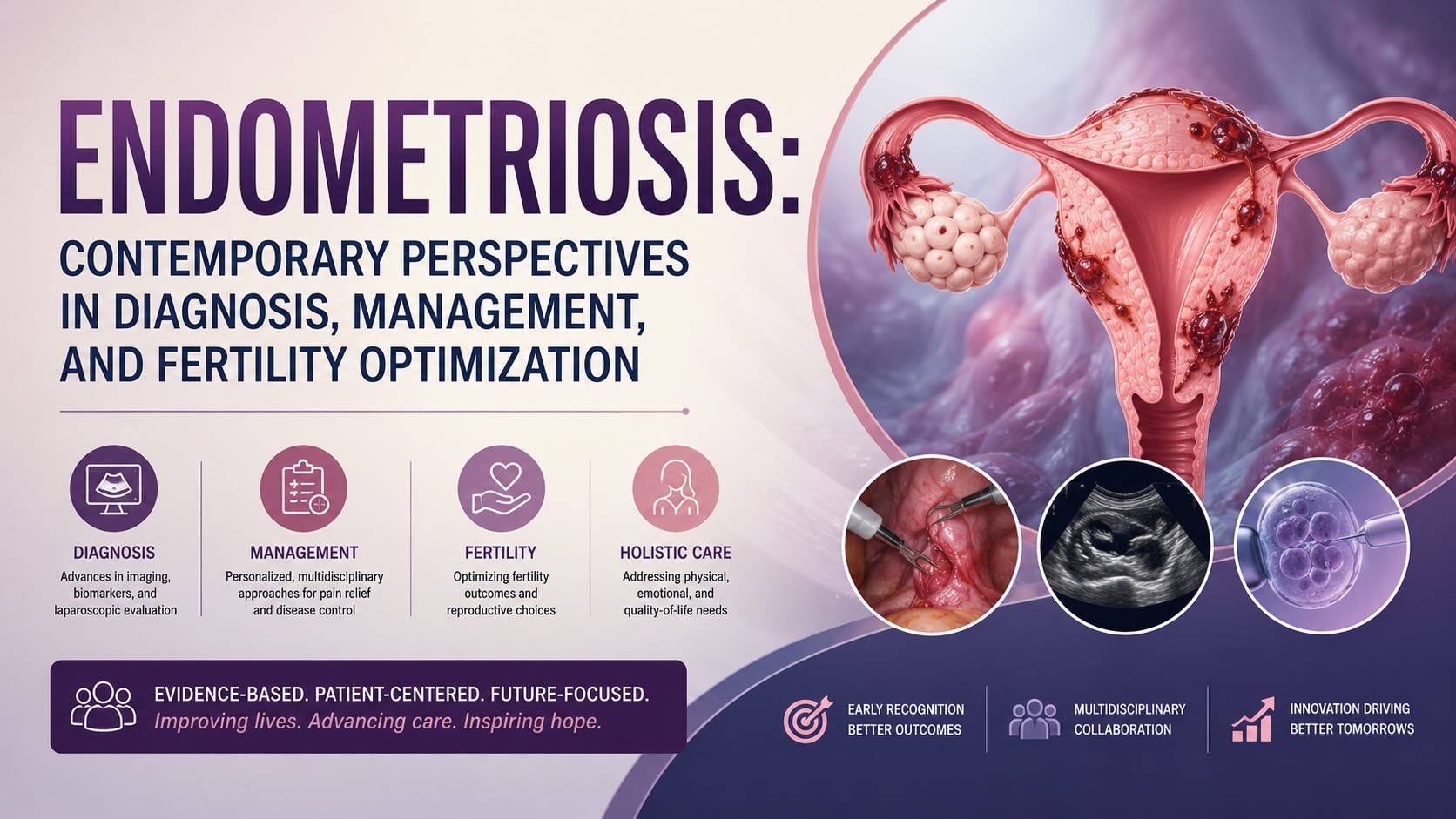
KEY KNOWLEDGE POINTS
-
Endometriosis is a chronic, inflammatory, and recurrent disease requiring a lifelong, individualized management plan rather than a one-time surgical cure.
-
The management paradigm has shifted from a surgery-first approach to prioritizing medical therapy, with surgery reserved for specific indications.
-
Artificial intelligence (AI) is an emerging tool for enhancing diagnostic precision, intraoperative lesion identification (e.g., GLENDA dataset), predictive modeling, and personalizing fertility treatment.
-
Diagnosis is increasingly based on clinical history (the "7Ds"), physical examination, and advanced imaging (ultrasound/MRI), reducing the need for diagnostic laparoscopy.
-
The pathophysiology of endometriosis-associated pain involves central sensitization, which surgery cannot resolve, necessitating a multimodal approach.
-
Newer medical therapies, including oral GnRH antagonists (e.g., Elagolix, Relugolix) and emerging non-hormonal agents, offer more effective long-term management options.
-
Surgical intervention for endometriomas carries a significant risk of diminishing ovarian reserve (AMH); routine pre-IVF surgery is not recommended and should be highly selective.
-
Endometriosis adversely affects fertility through distorted anatomy, inflammation, and impaired oocyte quality and endometrial receptivity. Stage III-IV disease is associated with lower ART success rates and increased obstetric risks.
-
ART strategies are individualized based on disease stage and an "Estradiol Fertility Index" (Estradiol FI). GnRH antagonist protocols are a standard of care in IVF, and pre-IVF hormonal suppression lacks robust evidence for improving outcomes.
-
Fertility preservation counseling is crucial for patients with extensive ovarian disease or those facing surgery that may compromise ovarian function.
-
Ethical principles—patient-centeredness, autonomy, transparency, and justice—must guide the adoption of AI and other advanced technologies in clinical practice.
INTRODUCTION
Endometriosis is a complex, chronic, and often debilitating inflammatory condition that presents significant diagnostic and therapeutic challenges. Affecting an estimated 246 million women globally, it is a primary cause of severe dysmenorrhea, chronic pelvic pain, and infertility. The management of endometriosis is undergoing a profound transformation, driven by technological advancements like artificial intelligence, new evidence from clinical research, and a greater emphasis on patient-centered outcomes, particularly fertility preservation. The traditional surgical-dominant approach is being re-evaluated in light of a contemporary understanding of the disease's pathophysiology, including its chronic nature and the phenomenon of central pain sensitization. This has led to a paradigm shift prioritizing long-term medical management and more selective use of surgery. This session explores these changing trends, focusing on the integration of AI, the shift towards medical management, and the nuanced decision-making required to optimize both symptomatic relief and future reproductive potential.
LEARNING OBJECTIVES
-
To understand the current shifts in the management paradigm for endometriosis, from a surgical-dominant to a medical-first and individualized approach.
-
To explore the potential applications of Artificial Intelligence (AI) in the diagnosis, classification, treatment planning, and fertility optimization for endometriosis.
-
To evaluate the role of medical management as a primary treatment modality, reviewing the spectrum of hormonal and emerging non-hormonal therapies, their efficacy, and side-effect profiles.
-
To discuss the complex relationship between endometriosis and infertility, and to critically appraise the evidence for surgical intervention versus assisted reproductive technology (ART).
-
To identify the specific indications for surgical intervention and the principles of modern surgical management, including the importance of preserving ovarian reserve.
CORE CONTENT
1. The Evolving Landscape of Endometriosis Management
The management of endometriosis is a dynamic field characterized by constant evolution in diagnostic nomenclature and therapeutic strategies. This academic session focuses on three core areas reshaping care: the integration of Artificial Intelligence (AI), the growing preference for medical management, and a prioritized focus on fertility.
1.1. Introduction to the Experts
-
Dr. Anu Chawla: An internationally recognized fertility specialist and Director of the London Fertility Clinic, presenting on AI in clinical decision-making.
-
Dr. T. Ramani Devi: Presenting on the paradigm shift toward medical therapy.
-
Dr. Madhuri Patel: Presenting on the management of endometriosis-associated infertility from a reproductive specialist's perspective.
2. The Role of Artificial Intelligence in Clinical Decision-Making
AI offers practical tools to standardize detection, optimize fertility pathways, and reduce subjective bias.
2.1. AI in Diagnosis and Image Recognition
-
Imaging Support: AI integration enhances the detection of endometriomas, adhesions, and subtle deep infiltrating endometriosis (DIE) on ultrasound and MRI. High-quality expert sonography, augmented by AI, may obviate the need for MRI in many cases.
-
Intraoperative Support: The GLENDA (Gynecological Laparoscopy Endometriosis Dataset) is an open-source platform of laparoscopic images used to train algorithms for real-time lesion identification (e.g., powder-burn, red, white, fibrotic variants). This reduces diagnostic variability and narrows the experience gap between trainees and experts.
-
Biomarkers: AI models are being developed to integrate clinical history, imaging, and biomarker data (e.g., serum microRNAs) to improve diagnostic accuracy. Salivary and serum miRNA signatures have shown high diagnostic potential (sensitivity/specificity >90%) for early detection.
2.2. AI in Predictive Modeling and Fertility Care
-
Personalized Planning: AI platforms (e.g., FEMME Project, Violet AI VF, Life Whisperer, ERICA) use inputs like age, AMH, and disease stage to help answer clinical questions regarding the timing of IVF, value of repeat surgery, and need for fertility preservation.
-
Embryo Selection: AI analyzes morphokinetics and embryo images to refine selection, correlating strongly with PGT-A outcomes. AI-augmented PGT-A may reduce biochemical pregnancies and increase live birth rates. AI can also help deselect embryos at high risk of aneuploidy non-invasively, mitigating the risk of discarding potentially viable embryos due to PGT-A's inherent error rate (~7%).
-
New Classifications: Single-cell transcriptomics, analyzed with AI, may lead to new classifications of endometriosis based on the cellular composition (epithelial, stromal, immune) of lesions, enabling more targeted therapies.
2.3. Ethical Integration of AI
The adoption of AI must be guided by foundational principles of patient-centeredness, autonomy, transparency, justice, and beneficence. AI should serve as an adjunct to clinical judgment, not an arbiter of care.
3. The Paradigm Shift Towards Medical Management
The preference for medical therapy is based on the understanding that endometriosis is a chronic disease that cannot be "cured" by surgery alone.
3.1. Rationale for Prioritizing Medical Therapy
-
Chronic Disease Management: Provides a long-term strategy for symptom suppression and disease control.
-
Avoids Surgical Risks: Eliminates risks of anesthesia, adhesion formation, and iatrogenic organ injury.
-
Preserves Ovarian Reserve: Surgery on the ovaries, particularly for endometriomas, invariably reduces AMH levels and follicular count.
-
Prevents Repeated Surgeries: A primary goal is to avoid multiple operations, which increase morbidity.
-
Addresses Central Sensitization: Endometriosis-associated pain involves neuroangiogenesis (a 14-fold increase in sensory nerve fibers) and central nervous system changes, creating nociplastic pain. Surgery cannot correct this, whereas medical therapies (including agents like gabapentin) can help manage the neuropathic component.
3.2. Spectrum of Medical Therapies
-
First-Line Hormonal Agents: Combined oral contraceptives (COCs), progestins (e.g., Medroxyprogesterone Acetate, Dienogest), and the Levonorgestrel-releasing IUS (LNG-IUS) are effective, cost-effective options. Dienogest (2 mg) is a widely used first-line therapy for pain and can be used for long-term suppression (up to seven years noted).
-
GnRH Agonists: Effective but limited by significant hypoestrogenic side effects.
-
Newer Hormonal Therapies:
-
Oral GnRH Antagonists (e.g., Elagolix, Relugolix, Linzagolix): Provide rapid, dose-dependent estrogen suppression, effective for both dysmenorrhea and non-menstrual pelvic pain. Relugolix combination therapy includes add-back estrogen/progestin to mitigate side effects like bone loss, allowing for longer-term use (up to 24 months).
-
-
Emerging and Non-Hormonal Therapies: Aromatase inhibitors, immunomodulators, anti-angiogenic drugs, and antibiotics (e.g., metronidazole) to modulate gut dysbiosis associated with the disease.
-
Add-Back Therapy: For long-term GnRH analogue/antagonist use, add-back therapy with calcium, vitamin D3, and sometimes bisphosphonates is crucial to mitigate bone mineral density loss, which should be monitored with a baseline DEXA scan.
4. Indications for Surgical Intervention
While medical management is the first line, surgery remains indispensable in specific circumstances, preferably in a center of excellence.
-
Suspicion of malignancy in an endometrioma.
-
Large (>5 cm), symptomatic endometriomas.
-
Acute or chronic organ compromise (e.g., bowel or ureteric obstruction).
-
Failed medical management after multiple appropriate lines of therapy.
-
Infertility in selected cases (e.g., to improve anatomy or when an endometrioma impedes oocyte retrieval), but generally avoided in patients with low AMH.
5. Endometriosis and Fertility: A Reproductive Medicine Perspective
Endometriosis impairs fertility via distorted anatomy, a toxic peritoneal environment, ovarian dysfunction (impaired folliculogenesis, reduced oocyte quality), and poor endometrial receptivity (progesterone resistance).
5.1. Impact of Disease Stage and Obstetric Risks
-
Reproductive Outcomes: In ART, Stage I–II endometriosis yields outcomes comparable to controls, whereas Stage III–IV disease is associated with significantly lower live birth and clinical pregnancy rates.
-
Obstetric Risks: Endometriosis is linked to increased risks of early pregnancy loss, ectopic pregnancy (2-3% higher rate after embryo transfer), gestational diabetes, hypertensive disorders, preterm birth, and placenta previa.
5.2. The Role of Surgery in Infertility
-
Stage I/II Disease: Recent guidelines express uncertainty about whether surgery improves fertility in this group.
-
Endometriomas: Routine pre-IVF surgery is not recommended as it does not improve pregnancy outcomes and harms ovarian reserve.
-
Excision (Cystectomy) vs. Ablation: Cystectomy leads to a more significant drop in AMH but has a lower recurrence rate. Ablation preserves more ovarian reserve but has a higher recurrence rate. Pregnancy outcomes are similar between the two techniques.
-
Surgical Technique: Meticulous dissection in the correct plane and selective hemostasis (suturing over excessive cautery) are critical to preserve ovarian tissue.
-
5.3. Assisted Reproductive Technology (ART)
-
Decision-Making: The "Estradiol Fertility Index" (Estradiol FI) can guide the pathway: FI >7 favors natural conception; FI 5–6 favors IUI; FI <4 favors IVF.
-
Intrauterine Insemination (IUI): COH-IUI is an option for Stage I/II disease with patent tubes, yielding a cycle fecundity of ~15% with gonadotropins. Up to three cycles may be attempted before proceeding to IVF.
-
In-Vitro Fertilization (IVF): Indicated for advanced disease, failed IUI, or diminished ovarian reserve.
-
Protocols: GnRH antagonist protocols are as effective as agonist protocols and are a standard of care. Long-term (3-6 months) GnRH agonist downregulation before IVF shows uncertain benefit and is not routinely recommended.
-
Pre-IVF Medical Therapy: Use of agents like Dienogest before IVF provides pain relief but does not appear to improve IVF outcomes.
-
Fresh vs. Frozen Embryo Transfer (FET): Recent evidence suggests that FET does not confer a benefit over fresh transfer for improving live birth rates in women with ovarian endometriosis.
-
5.4. Fertility Preservation
Counseling on oocyte or embryo cryopreservation is strongly recommended for patients with extensive ovarian disease, large bilateral endometriomas, or low ovarian reserve, especially before undergoing ovarian surgery.
6. Closing Remarks and Future Directions
The webinar concluded with acknowledgments and an announcement of a subsequent session on the terminology shift from Polycystic Ovary Syndrome (PCOS) to a new designation (PMOS), scheduled for June 9, 2026, at 15:30 IST.
SURGICAL PEARLS
-
Practical tips based on surgical experience:
-
The goal of endometriosis management is lifelong disease control, not a one-time surgical cure. Avoid the temptation to perform repeated surgeries for recurrence.
-
Before operating for an endometrioma, always assess ovarian reserve (AMH, AFC). In a patient with low AMH, surgery can be detrimental; consider ART first.
-
When performing an endometrioma cystectomy, meticulous technique is paramount. Identify the correct cleavage plane to minimize removal of healthy follicles and use selective hemostasis (suturing) over excessive coagulation.
-
In a young patient with an adnexal mass, severe acute pain, and a markedly elevated CA-125 (e.g., >3000 U/mL), consider a ruptured endometrioma as a primary differential diagnosis.
-
-
Common mistakes and how to avoid them:
-
Do not default to repeat surgery for pain that persists after complete surgical excision; this is often due to central sensitization and requires medical management for neuropathic pain.
-
For deep infiltrating endometriosis, preoperative MRI and multidisciplinary planning are the standard of care. Recognize the complexity and refer to an expert surgeon at a center of excellence to avoid incomplete surgery and iatrogenic harm.
-
Do not rely on CA-125 for initial diagnosis, as its levels do not correlate with disease stage. It is, however, useful for monitoring disease recurrence in the follow-up period.
-
ANESTHETIC AND PHYSIOLOGICAL CONSIDERATIONS
Not specifically discussed in this lecture.
COMPLICATIONS AND THEIR MANAGEMENT
-
Intraoperative:
-
Bowel, Bladder, or Ureteric Injury: Risks are highest in DIE surgery and require immediate recognition and multidisciplinary repair.
-
Iatrogenic Ovarian Damage: The primary concern is damage to the ovarian reserve from excessive stripping of the cortex or thermal injury during hemostasis.
-
-
Early Postoperative:
-
Adhesion Formation: A common sequela that can be mitigated with meticulous hemostasis and adhesion barriers.
-
-
Late Postoperative:
-
Diminished Ovarian Reserve: An unavoidable consequence of ovarian surgery, especially bilateral cystectomy. Patients must be counseled preoperatively.
-
Recurrence: Occurs in 20-40% of cases within 5 years. Postoperative medical suppression (e.g., Dienogest for at least two years) is key to delaying recurrence in patients not seeking immediate fertility.
-
Cardiovascular Risk: Postmenopausal women with a history of endometriosis have a higher incidence of myocardial infarction and stroke due to the chronic inflammatory state and require long-term cardiovascular monitoring.
-
MEDICOLEGAL AND PATIENT SELECTION CONSIDERATIONS
-
Informed consent must explicitly cover the chronic nature of endometriosis, the high risk of recurrence, the potential for diminished ovarian reserve with surgery, and the side effects of long-term medical therapy.
-
Operating on asymptomatic or small endometriomas in patients with low ovarian reserve planning IVF is not the standard of care and may be difficult to justify if fertility potential is diminished.
-
Complex cases, particularly DIE, should be referred to a center of excellence. Failure to do so may be considered a deviation from the standard of care.
-
The decision for surgery versus immediate ART must be individualized and documented, based on the patient's age, symptoms, ovarian reserve, and reproductive goals.
-
Ensure equitable access to AI tools and avoid biases. Uphold patient autonomy with transparent counseling on AI-assisted recommendations versus conventional options.
SUMMARY AND TAKE-HOME MESSAGES
-
View endometriosis as a chronic inflammatory disease requiring a lifelong, individualized management plan that prioritizes medical therapy and avoids repeated surgeries.
-
Adopt the current diagnostic model: diagnose based on clinical suspicion and imaging, reserving laparoscopy for therapeutic intervention.
-
AI is a practical adjunct across the continuum of endometriosis care, from enhancing detection and staging to personalizing fertility planning.
-
Routine surgery for endometriomas before IVF is not recommended as it does not improve live birth rates and can harm ovarian function.
-
Patient counseling is paramount. Decisions must be collaborative, based on the patient’s age, ovarian reserve, symptoms, and reproductive goals, with a clear discussion of all risks and benefits.
MULTIPLE CHOICE QUESTIONS (MCQs)
-
What is the current primary goal of endometriosis management as endorsed by major gynecological societies?
a) To achieve a definitive cure through a single, complete surgical excision.
b) To use laparoscopy as the gold standard for initial diagnosis in all cases.
c) To maximize the use of medical treatment and avoid repeated surgeries.
d) To perform surgery on all endometriomas to prevent malignant transformation.
Answer: c
-
GLENDA is best described as:
a) A proprietary MRI sequence for detecting deep infiltrating endometriosis.
b) An open-source laparoscopic image dataset used to train AI for lesion identification.
c) A new formulation of a GnRH antagonist.
d) A clinical scoring system for predicting fertility after surgery.
Answer: b
-
According to the lecture, why is surgery often ineffective for resolving chronic endometriosis-associated pain?
a) It is technically too difficult for most gynecologists to perform completely.
b) It cannot address the central sensitization component of chronic pain.
c) Medical therapy is always curative, making surgery obsolete.
d) The lesions always regrow to their original size within six months.
Answer: b
-
When comparing endometrioma cystectomy versus ablation for infertility patients, which statement is true?
a) Cystectomy results in a lower recurrence rate but a greater drop in AMH.
b) Ablation has a lower recurrence rate and better preserves AMH.
c) Cystectomy significantly improves live birth rates more than ablation.
d) Both techniques have identical effects on AMH and recurrence rates.
Answer: a
-
What is the recommended management for a 30-year-old asymptomatic patient with a 4 cm unilateral endometrioma who is planning to undergo IVF?
a) Proceed directly to IVF without prior surgery.
b) Perform a laparoscopic cystectomy to improve IVF outcomes.
c) Administer three months of a GnRH agonist before starting IVF.
d) Perform laparoscopic ablation of the endometrioma to improve oocyte quality.
Answer: a
-
Which of the following is an explicit indication for surgical intervention in endometriosis?
a) An asymptomatic 2 cm endometrioma in a patient planning IVF.
b) Mild dysmenorrhea that is well-controlled by oral contraceptives.
c) Ureteric obstruction caused by deep infiltrating endometriosis.
d) A first-time diagnosis of suspected endometriosis in an adolescent.
Answer: c
-
What does recent evidence suggest regarding a "freeze-all" strategy versus fresh embryo transfer in women with ovarian endometriosis?
a) A "freeze-all" strategy significantly improves live birth rates.
b) Frozen embryo transfer does not confer a benefit over fresh transfer for live birth rates.
c) Fresh transfer leads to a much higher risk of ovarian hyperstimulation syndrome in this group.
d) Fresh transfer is contraindicated in all patients with endometriosis.
Answer: b
-
The pathophysiology of endometriosis-associated pain involves neuroangiogenesis, which is characterized by:
a) A complete absence of nerve fibers within the endometriotic lesions.
b) A 14-fold higher incidence of sensory nerve fibers in lesions.
c) The exclusive presence of motor nerve fibers.
d) The regeneration of damaged nerves after surgical excision.
Answer: b
-
What is the recommended minimum duration for postoperative suppressive therapy (e.g., Dienogest) to prevent recurrence in a patient not seeking immediate pregnancy?
a) 6 months
b) 1 year
c) 2 years
d) 5 years
Answer: c
-
Which statement accurately reflects the utility of CA-125 in endometriosis management?
a) It is a highly specific marker for initial diagnosis.
b) Its level directly correlates with the stage of the disease.
c) It is not useful for initial diagnosis but can help monitor for recurrence.
d) A normal level effectively rules out endometriosis.
Answer: c
-
The "Estradiol Fertility Index" (Estradiol FI) is a tool used to:
a) Diagnose endometriosis non-invasively using serum estradiol levels.
b) Guide the clinical pathway between natural conception, IUI, and IVF.
c) Determine the best medical therapy for pain management.
d) Score the severity of deep infiltrating endometriosis on an MRI.
Answer: b
-
In which patient population is fertility preservation counseling most strongly recommended?
a) Patients with Stage I peritoneal endometriosis and normal AMH.
b) Patients with large bilateral endometriomas and low ovarian reserve.
c) All adolescent patients diagnosed with endometriosis.
d) Patients whose pain is well-controlled on oral contraceptives.
Answer: b
-
What is a key advantage of Relugolix combination therapy over traditional GnRH agonists?
a) It is administered via a single annual implant.
b) It is completely free of any side effects.
c) It includes add-back therapy to mitigate bone mineral density loss.
d) It is more effective than surgery for treating DIE.
Answer: c
-
For patients with Stage III-IV endometriosis-associated infertility, what is the preferred treatment of choice?
a) Up to six cycles of IUI with clomiphene citrate.
b) Expectant management for at least one year.
c) IVF with a GnRH antagonist protocol.
d) Immediate diagnostic and therapeutic laparoscopy.
Answer: c
-
What is the current evidence regarding long-term (3-6 months) GnRH agonist downregulation prior to an IVF cycle for endometriosis?
a) It is essential for improving live birth rates and is routinely recommended.
b) It has an uncertain benefit for pregnancy outcomes and is not routinely recommended.
c) It significantly increases the number of oocytes retrieved in all patients.
d) It is only useful for patients with Stage I-II endometriosis.
Answer: b
-
What is a primary mechanism by which endometriosis impairs endometrial receptivity?
a) Estrogen resistance and progesterone dominance.
b) Progesterone resistance and estrogen dominance.
c) A complete absence of all hormonal receptors.
d) An over-secretion of GnRH from the hypothalamus.
Answer: b
-
A young patient with a known endometrioma presents with acute severe pain and a CA-125 level over 3000 U/mL. What is the most likely diagnosis?
a) Ovarian malignancy
b) Torsion of the ovary
c) Pelvic inflammatory disease
d) Rupture of the endometrioma
Answer: d
-
The use of single-cell transcriptomics combined with AI may lead to:
a) A universal cure for endometriosis within five years.
b) A new, more specific classification system for endometriosis based on cellular composition.
c) The complete elimination of the need for surgery in endometriosis.
d) A vaccine that can prevent the development of endometriosis.
Answer: b
-
A key medicolegal consideration before performing surgery for endometriosis is:
a) Guaranteeing a successful pregnancy post-surgery to the patient.
b) Obtaining consent from the patient's partner or spouse.
c) Ensuring the patient signs a waiver absolving the surgeon of all responsibility.
d) Documenting a thorough discussion about the chronic nature of the disease and the high risk of recurrence.
Answer: d
-
What is the appropriate management immediately following surgery for endometriosis in a patient who desires to conceive?
a) Start Dienogest for a minimum of two years to prevent recurrence.
b) Start a combined oral contraceptive pill for six months.
c) Proceed directly with fertility treatment without suppressive therapy.
d) Administer a GnRH agonist for 6 months to improve implantation rates.
Answer: c
MOTIVATIONAL MESSAGE FROM DR. R. K. MISHRA
The finest instrument in surgery is a mind sharpened by relentless study and a character forged by discipline. Your decisions carry the weight of your patient's future; make them with wisdom, humility, and unwavering care.
May you always find fulfillment in your service and continue to advance our noble profession with integrity and skill. My best wishes are with you.